

9 Things You Didn’t Realise Are Freediving (But Actually Are)

Think freediving is all about depth? These nine surprising forms prove there’s much more to the sport than diving deep on a line.
By Haley Harrison
Editor Zowie Palliaer
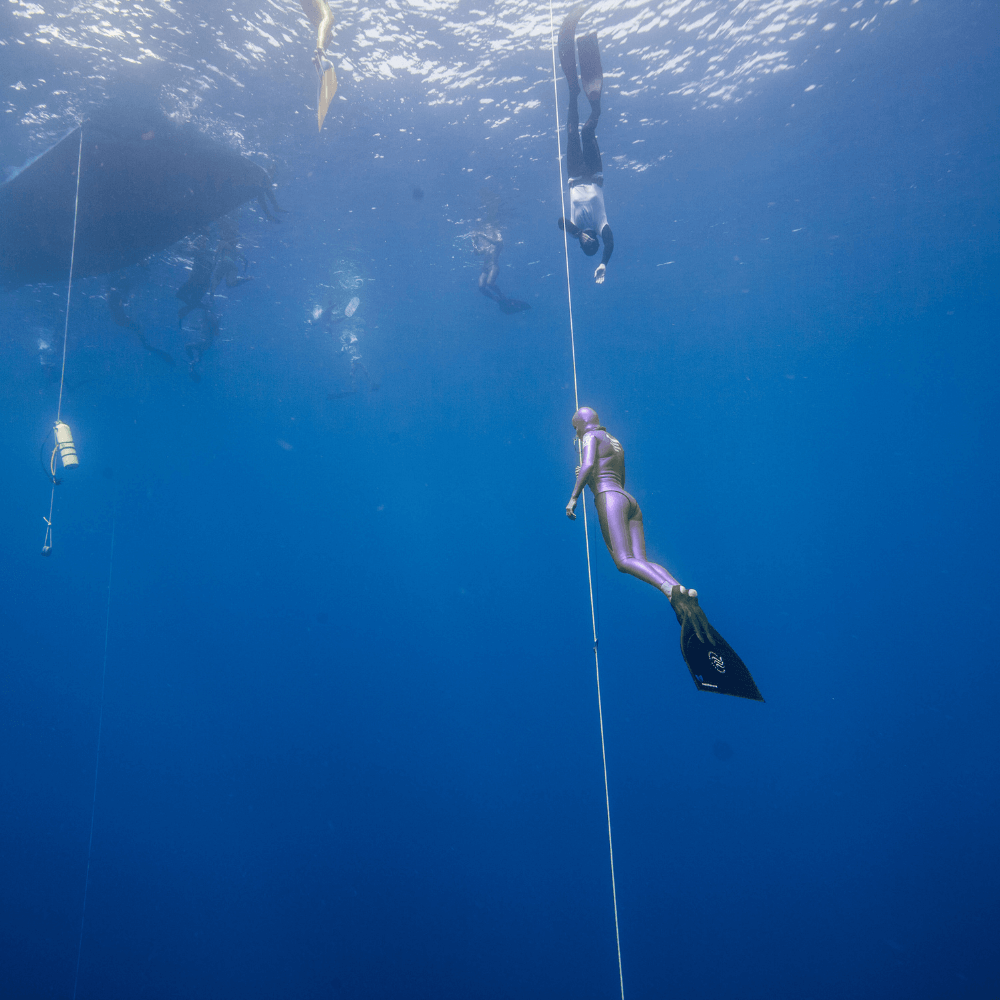
Across cultures and communities, people have found countless ways to explore and work underwater on a single breath. Photo credit © @yanitayancheva.
The world of freediving is much bigger than diving deep on a line. From hunting for food and photographing marine life to dancing underwater and even swimming in a mermaid tail, breath-hold diving appears in more places than you might expect.
In fact, you may have already experienced a form of freediving without even realising it.
So, if you’re curious about what freediving can look like beyond competitive depth diving, here are nine surprising ways people use a single breath to explore, perform, compete, work, and connect with the underwater world.
But first, what is freediving?
Many of us played that game as a kid where we’d float in the bath or pool and see how long we could hold our breath. Some of us may even have dived down to collect sunken toys from the bottom. If that was you, you’ve already had a small taste of freediving.
At its core, freediving is diving underwater on a single breath of air. There’s no breathing apparatus underwater, which opens up a world of possibilities beyond simply diving down a line.
Freediving can be a competitive sport, a recreational activity, a practical skill, or even a form of creative expression.
As famed freediver Natalia Molchanova once said, “Freediving is not only a sport, it is a way to understand who you are.”
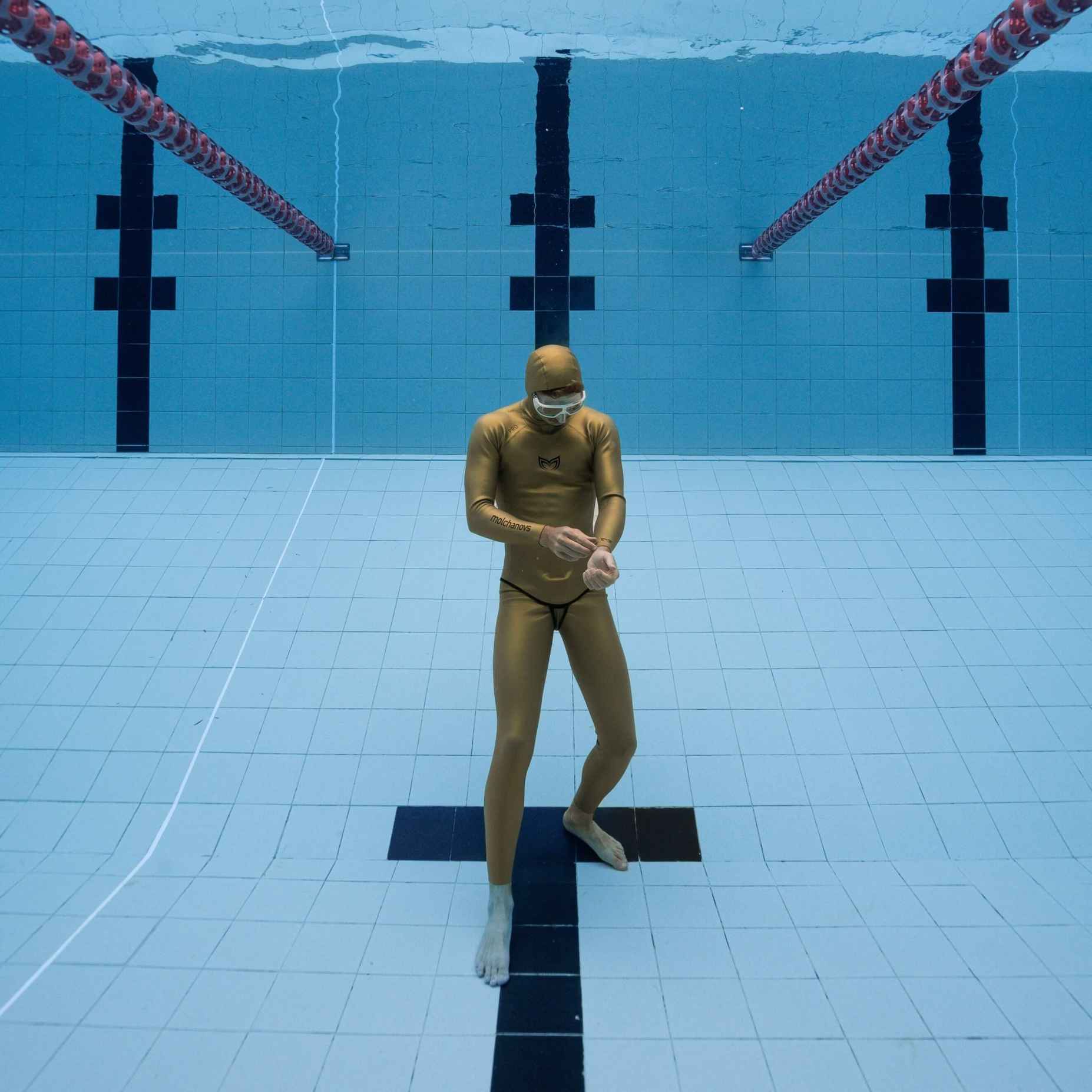
 Pool freediving shifts the focus from depth to distance, with athletes swimming as far as possible underwater on a single breath. Photo © @junglefreediver.
1. Spearfishing
Who said freediving was merely for sport? Some forms of breath-hold diving have been used to put food on the table for generations.
Many coastal communities around the world have long practised spearfishing as a way to harvest food from the sea. As the name suggests, spearfishing involves using pointed tools such as hand spears or spearguns to hunt fish underwater.
Spearfishing is highly technical, combining freediving skills with patience, hunting techniques, and an understanding of marine life. Divers need to move quietly, stay relaxed, conserve oxygen, and get close enough to their target for a clean shot.
It’s a very different experience from fishing from a boat or pier: instead, you become part of the underwater environment.
2. Surf Hold-Downs
If you’re a surfer who has been caught underneath a wave in a hold-down that seemed to last forever, you’re already familiar with some of the mental demands of freediving.
Both surfers and freedivers need to remain calm underwater, manage stress, and conserve oxygen when the urge to breathe starts to build.
Freedivers might have a hard time finding their way around a surfboard, but surfers often already possess some of the mental skills that can help when learning to freedive. It’s also one reason many surfers choose to take freediving courses.
3. Pool Freediving
When most people picture freediving, they imagine athletes disappearing into deep water. But some competitive freediving disciplines take place entirely in a swimming pool.
Pool freediving focuses primarily on distance rather than depth. Athletes compete to see how far they can swim underwater on a single breath using a monofin, bifins, or no fins at all.
And don’t let the shallow water fool you. Elite athletes can cover more than 300 meters underwater in a single breath.
Pool freediving also offers an accessible way to train and compete without needing access to deep open water, making it an important part of the sport in its own right.
 A quick dive below the surface while snorkeling can be someone’s first taste of freediving. Photo © Novak Family.
4. Snorkeling
Snorkeling isn’t technically freediving while you’re breathing through a snorkel at the surface, but it often becomes a person’s first introduction to breath-hold diving.
Spot a turtle, reef fish, or something interesting a few meters below and chances are you’ll instinctively take a breath and dive beneath the surface. For those moments underwater, you’re freediving.
That curiosity is how many people get started. One day you’re snorkeling on holiday; the next, you want to stay underwater a little longer, dive a little deeper, and learn how to do it safely and comfortably.
Safety tip: If you do dive below the surface while snorkeling, remember to remove the snorkel from your mouth before descending and always practise breath-hold diving with appropriate supervision and safety procedures.
5. Mermaiding
Mermaids are real. Well, sort of.
Professional mermaids perform at aquariums, theme parks, events, and underwater photoshoots, but beneath the fantasy is a serious set of underwater skills.
Mermaids use many of the same breath-hold and swimming techniques as freedivers while also managing a tail and performing choreographed movements underwater.
Dominique Abraham, expert mermaid behind the Mermaid Training Program, also sees mermaiding as a way to strengthen people’s connection with the ocean, and has taken part in conservation and environmental awareness projects through her work.
So, if you like your freediving with a side of fantasy, performance, and creativity, mermaiding might be for you.

Mermaiding blends breath-hold diving with performance, movement and creative expression underwater. Photo © @chelseaskyeater.
6. Pearl Diving
For centuries, Japan’s famous Ama divers have harvested shellfish, seaweed, abalone, and other marine resources using breath-hold diving techniques.
Their tradition is especially remarkable for its longevity. Some Ama continue diving well into later life, demonstrating that breath-hold diving does not have to be reserved for young athletes chasing records.
Instead, it can be a lifelong skill and a way of maintaining a close connection with the sea.
7. Underwater Dancing
Freediving doesn’t always have to be about depth, distance, or numbers.
Sometimes it’s about creativity.
Underwater dancing combines movement, breath control, and artistic expression in an environment where the usual rules of gravity change completely. Movements that would be difficult or impossible on land can take on an entirely different quality underwater.
Whether it’s synchronised swimming, solo choreography, or underwater performance, dancing on a single breath shows a very different side of freediving.
8. Underwater Photography
For underwater photographers, freediving can offer some very practical advantages.
Without a scuba tank, regulator, and bubbles, photographers can often move more naturally and quietly through the water. That freedom can make it easier to position for a shot and, in some situations, approach marine life with less disturbance.
Some incredible underwater imagery is captured by photographers working on a single breath, blending freediving ability with an understanding of marine life, light, composition, and timing.

Freediving skills can support marine conservation through reef monitoring, debris removal, habitat restoration and citizen science. Photo © REEFolution Foundation.
9. Marine Conservation Work
Finally, freediving can also be a valuable tool for protecting the underwater world.
Around the world, volunteers and conservation teams use freediving skills to monitor reefs, remove marine debris, restore habitats, collect scientific data, and support marine research.
You don’t necessarily need to be a marine biologist to contribute. For some projects, freediving skills can simply help volunteers access the underwater environment more efficiently and take a more active role in protecting the places they love to explore.
Which Type of Freediving Is Right for You?
Freediving can be competitive, practical, creative, recreational, or somewhere in between. You might be drawn to depth diving, pool disciplines, underwater photography, mermaiding, conservation, or simply the freedom of exploring beneath the surface on one breath.
If you’re curious and want to experience freediving for yourself without committing to a full course, a Discover Freediving experience is an easy way to get your first introduction with a qualified instructor.
If you’re ready to build a complete foundation in freediving technique, safety, equalisation, breathing, and rescue skills, find a Molchanovs Wave 1 course near you and begin your freediving journey with a certified instructor.
Before booking any freediving course, take a few seconds to check who you’re trusting underwater. Use the Molchanovs Instructor Search to verify that your instructor is currently qualified and authorised to teach Molchanovs courses.
코멘트를 남겨주세요