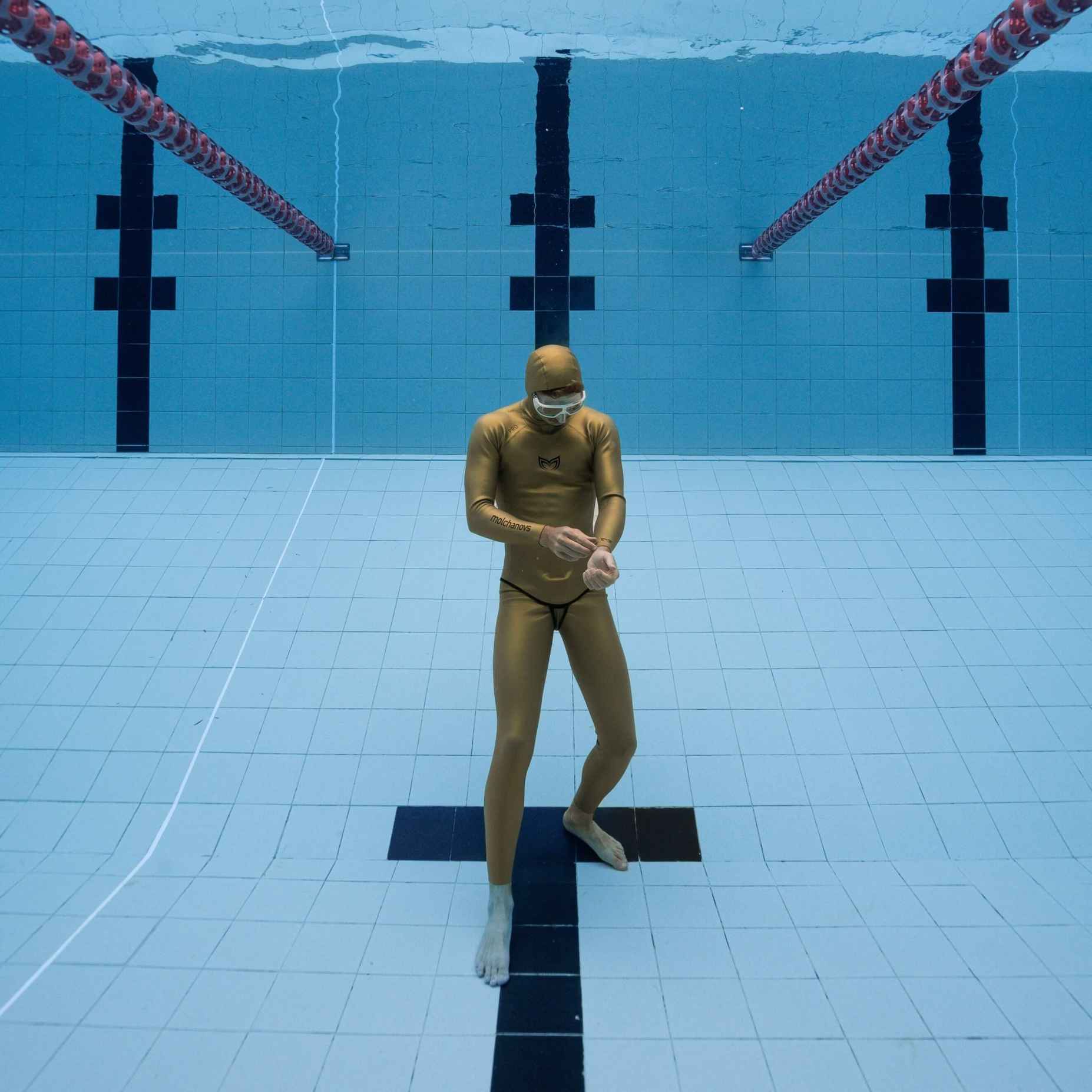
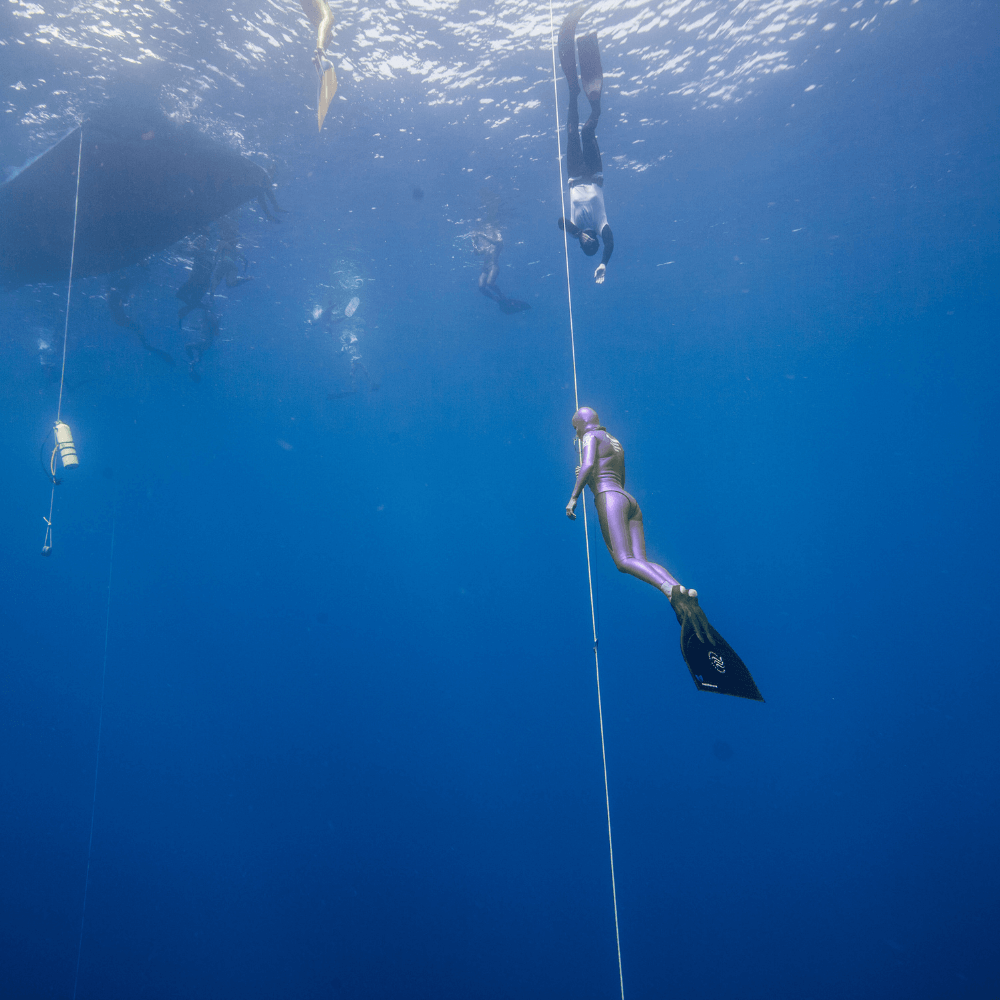


Alexey Molchanov는 바이칼 호수에서 새로운 얼음 밑 프리다이빙 세계 기록을 세웠습니다.

알렉세이 몰차노프(Alexey Molchanov)는 바이칼 호수 얼음 아래 91미터까지 다이빙하여 얼음 밑 프리다이빙 세계 신기록을 세웠습니다.
작성자: 디나 린치
알렉세이 몰차노프(Alexey Molchanov)는 눈 덮인 산이 수평선을 가로질러 뻗어 있는 바이칼 호수의 얼어붙은 표면 아래로 다이빙을 준비하고 있습니다. 사진 © @nepokolebim
켜짐 2026년 3월 3일, 프리다이버 알렉세이 몰차노프 새로 설정하다 언더 아이스 세계 기록, 내림차순 91미터(299피트) 얼어붙은 표면 아래에서 단 한 번의 숨결로 바이칼 호수, 지구상에서 가장 깊은 호수.
다이빙은 다음에서 수행되었습니다. 일정 중량(CWT) 사용하여 모노핀, 프리다이빙에서 가장 극한 환경 중 하나에서. 표면 온도에 도달함 -23°C(-9°F), 얼음 아래의 물이 측정되는 동안 2°C(35.6°F). 호수가 단단한 얼음판 아래에 봉쇄되어 있기 때문에 프리다이버들은 동결된 표면을 통과하는 단일 입구 및 출구 구멍 절단.
전체 다이빙이 지속되었습니다. 3분도 안 돼서, 몰차노프는 Molchanovs PRO 5mm 잠수복 그리고 Molchanovs PRO 모노핀 4X 카본.
기록적인 다이빙은 제3회 국제 아이스 프리다이빙 페스티벌 '바이칼의 얼음 아래', 2026년 3월 1일부터 6일까지 러시아 이르쿠츠크 지역 리스트뱐카에서 개최되었습니다.
 단일 컷 진입점이 표시된 바이칼 호수의 얼음 아래 다이빙 장소 Molchanovs PRO 부표 표면에. © @nepokolebim.
얼음 전 준비
환경 자체는 혹독하지만, 이와 같은 다이빙을 위한 기초는 호수에 도착하기 오래 전에 구축됩니다.
Molchanov의 경우 준비는 핵심 프리다이빙 원칙, 즉 숨 참기 훈련, 효율성, 통제된 조건에서 개발된 세련된 기술로 시작됩니다.
"얼음 밑 기록 준비는 호수에 오기 전부터 시작됩니다. 숨을 참고 훈련하고, 수영장에서 많은 훈련을 하고, 모노핀을 사용하여 연습하는 것이 최대한 효율적입니다."
추위에 노출되는 것에만 의존하기보다는 따뜻한 물에서 강력한 베이스라인을 구축하는 데 중점을 둡니다. 기술, 합리화 및 심도 적응이 먼저 확립되고 추위에 대한 적응은 나중에 이루어집니다.
장비에 적응하는 것도 마찬가지로 중요합니다. 얼음 밑 다이빙에는 더 두꺼운 잠수복, 장갑, 추가 장비가 필요하며, 이 모두는 저항을 증가시키고 더 많은 에너지 소비를 요구합니다.
Molchanov는 효율성을 향한 의도적인 전환을 통해 올해 다이빙에 접근했습니다. 5mm 잠수복 7mm 대신 항력을 줄이고 유체 역학을 향상시킵니다. 무게가 2kg에 불과한 더 가벼운 설정과 결합되어 더욱 유선형적인 신체 위치와 물 속에서 더욱 부드러운 움직임이 가능해졌습니다.
 알렉세이 몰차노프(Alexey Molchanov)는 단 한 번의 호흡으로 얼음 아래 91미터까지 내려와 얼음 아래 세계 신기록을 세웠습니다. © @evsychev
극한 상황 탐색
다이빙 당일의 조건은 혹독했지만 안정적이었습니다. 차갑고 맑았으며 신중한 계획을 통해 관리가 가능했습니다.
햇빛은 약간의 완화를 제공했습니다. -20°C 기온, 적당한 바람이 물류를 통제하는 동안. 이러한 환경에서는 작은 세부사항조차 중요해집니다. 예를 들어, 보온 텐트와 다이빙 장소 사이의 거리는 체온 조절 및 준비 상태에 큰 영향을 미칠 수 있습니다.
Molchanov는 따뜻함에서 물로의 전환을 신중하게 타이밍하여 노출을 최소화하고 다이빙을 효율적으로 수행할 수 있도록 완전히 준비하여 호수에 들어갔습니다.
표면 아래의 환경은 고요함과 추위로 변합니다. 수온은 영하 가까이 맴돌다가 깊이가 깊어짐에 따라 약간 떨어지며, 생리적 반응은 관리하기가 더욱 어려워집니다.
"찬물에서는 이퀄라이징이 정말 어렵습니다. 입술과 근육이 같은 방식으로 작동하지 않고 압력을 가하는 것이 더 어렵습니다."
이에 대응하기 위해 Molchanov는 마스크 균등화를 위한 공기 사용을 줄이기 위해 노즈 클립과 하프 마스크를 사용하여 이러한 까다로운 조건에서 작지만 중요한 조정을 통해 설정을 개선했습니다.
 Alexey Molchanov는 얼음 진입 지점에 잠수하여 거의 얼어붙는 물과 얼음 밑 프리다이빙의 극명하고 제한된 환경에 직면했습니다. © @nepokolebim
숫자를 넘어서는 노력
공식적으로 도달한 깊이는 91미터, 얼음 밑 다이빙에 필요한 노력은 숫자 자체를 훨씬 뛰어넘습니다.
추위, 제한된 움직임, 환경적 스트레스의 결합된 효과는 따뜻한 물 다이빙에 비해 신체적, 정신적 부담을 크게 증가시킵니다.
상대적인 측면에서 Molchanov는 다이빙을 훨씬 더 깊은 노력과 비교할 수 있다고 설명합니다.
그럼에도 불구하고 실행은 그의 준비와 경험을 모두 반영하여 통제되고 효율적으로 유지되었습니다.
 세계 신기록 다이빙을 가능하게 만든 안전팀, 자원봉사자, 조직자들과 함께한 알렉세이 몰차노프(Alexey Molchanov) © @evsychev
집단적 성취
이러한 극한 상황에서의 다이빙은 결코 개인의 노력이 아닙니다. 안전 다이버, 자원봉사자, 조직자는 현장을 준비하고 안전 프로토콜을 관리하며 운동 선수를 지원하기 위해 거의 얼어붙은 물에서 몇 시간 동안 일합니다.
그들의 역할은 실행뿐만 아니라 시도 자체의 가능성을 가능하게 하는 데 있어서도 중요합니다.
Molchanov는 이러한 환경에서 운영하는 데 필요한 헌신의 수준을 강조하면서 기록 뒤에 있는 팀을 인정했습니다.
 텐트와 다이빙 장소 사이를 걷는 Alexey Molchanov는 그의 모노핀 그는 얼음 밑 프리다이빙의 한계를 뛰어넘을 준비를 하고 있습니다. © @nepokolebim
계속해서 한계를 뛰어넘다
이 다이빙 마크 알렉세이 몰차노프(Alexey Molchanov)의 42번째 세계 기록 그리고 그의 네 번째 얼음 밑 깊이 기록, 프리다이빙에서 가능한 것의 경계를 더욱 확장합니다.
바이칼 호수, 단단한 얼음 아래, 거의 얼어붙은 물 속에서 들어오고 나가는 길이 단 하나뿐인 곳에서 이 성취는 깊이 그 이상을 나타냅니다. 이는 가장 까다로운 환경 중 하나에서 정밀도, 적응성 및 제어의 조합을 반영합니다. 축하해요 알렉세이!
42x 월드 챔피언에게서 직접 배우세요. 기초 호흡법 코스, 또는 모노핀 기초 훈련 프로그램. 프리다이빙이 처음이신가요? 집에서 시작해 보세요. 초보자 온라인 프리다이빙 코스.
코멘트를 남겨주세요