



When Your Body Isn’t the Limit: Mental Fatigue vs. Physical Fatigue in Freediving

Two Different Limits. One Shared Sensation.
By Bevin Reynolds
Editor Deena Lynch
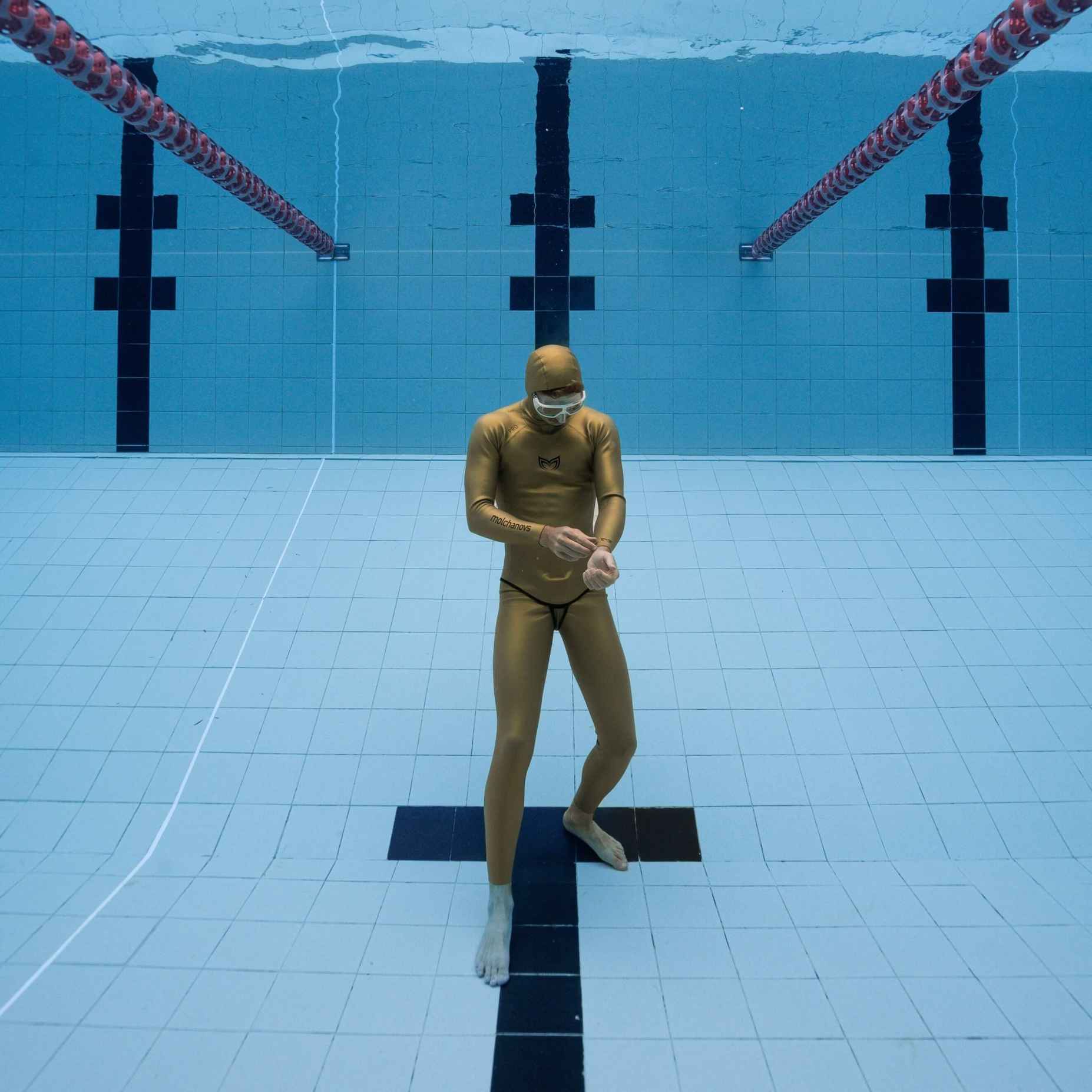
From the inside, mental and physical fatigue can feel indistinguishable. © Photo credit. @oceanbrodie.
As freedivers, we train to tolerate the discomfort of diving without breathing. We practise staying with this discomfort and learn not to react when the sensations arise. We fixate on how we can “increase our comfort zone” or “push our limits” because this is the nature of our sport.
So when things don’t go according to plan, we often reach for a single word: fatigue.
Yet the experience of being fatigued in freediving is not singular. While we are not simply a mind and a body (our system is far more integrated – more like a body-mind), it can still be helpful to think of fatigue as arising from two theoretical systems: one physiological and one psychological.
From the inside, they may feel almost identical or indistinguishable. Yet they require quite different responses when they arise.
Physical fatigue reduces what our bodies can produce.
Mental fatigue alters how that production feels or is perceived.
Both can end a dive. And they do so for different reasons.
 Physical fatigue reveals itself through the body; when effort rises, efficiency drops and each movement begins to cost more. © Photo credit @behindthelens.laura.
Our Physical Limits
Physically, fatigue reflects limits in our muscular and neural functioning. Muscles lose efficiency, neural drive drops and the metabolic waste from apnea (breath hold) accumulates.
Freediving performance unfolds under progressive hypoxia and rising CO₂. The autonomic nervous system undergoes a shift. At depth, pressure alters buoyancy and internal physiology. In the pool, small inefficiencies quietly compound oxygen cost meter by meter.
Other aspects of life such as training load, nutrition, hormones, sleep quality and recovery all influence our physical ceiling of performance and what our physical limits are on any given day.
When physical fatigue is the primary limiter, the pattern tends to make sense. The body feels heavier earlier than expected. Propulsion costs more. Streamline erodes. Freefall loses its ease. Recovery time needed between dives stretches longer.
Across sessions, performance often trends downward in ways that mirror the body’s reduced capacity.
While complex, there is usually little mystery here – the system is either under-recovered or in need of adjustment.
In this case, our performance ceiling is physical.
Our Mental Limits
Mental fatigue is quieter and often harder to name.
In sport science, it describes a state produced by sustained cognitive effort. Factors such as travel, emotional regulation, training or competition pressure, and life outside the water all impact our psychological capacity.
The effects of mental fatigue are well documented: perceived effort rises, attention becomes scattered, motivation drops, resistance increases and technique smoothness declines. Discomfort feels sharper and arrives earlier.
Importantly, mental fatigue does not necessarily reduce muscular capability. Instead, it changes how hard the same effort feels and how willing we are to stay in the discomfort.
Endurance research repeatedly shows that mentally fatigued athletes rate identical tasks as more difficult, even when measurable output remains stable.
In other words, our physical capacity may remain intact, but our experience of that capacity shifts.
Why Perception Is Central in Freediving
In many endurance sports, perception shapes pacing.
In freediving, it shapes continuation.
It influences:
-
The patience to hold a glide.
-
The courage to stay with rising discomfort.
-
The precision required for equalization and technique smoothness.
-
The willingness to surrender into freefall.
-
The steadiness required during turns and execution of the surface protocol.
-
The judgment to abort or call for safety when needed.
If effort feels elevated prematurely, dives tend to be shorter – even when oxygen is still available.
In other words, mental fatigue adjusts our internal dial, while physical fatigue sets our performance ceiling.
From within, both feel like the same signal of “I can’t continue.”
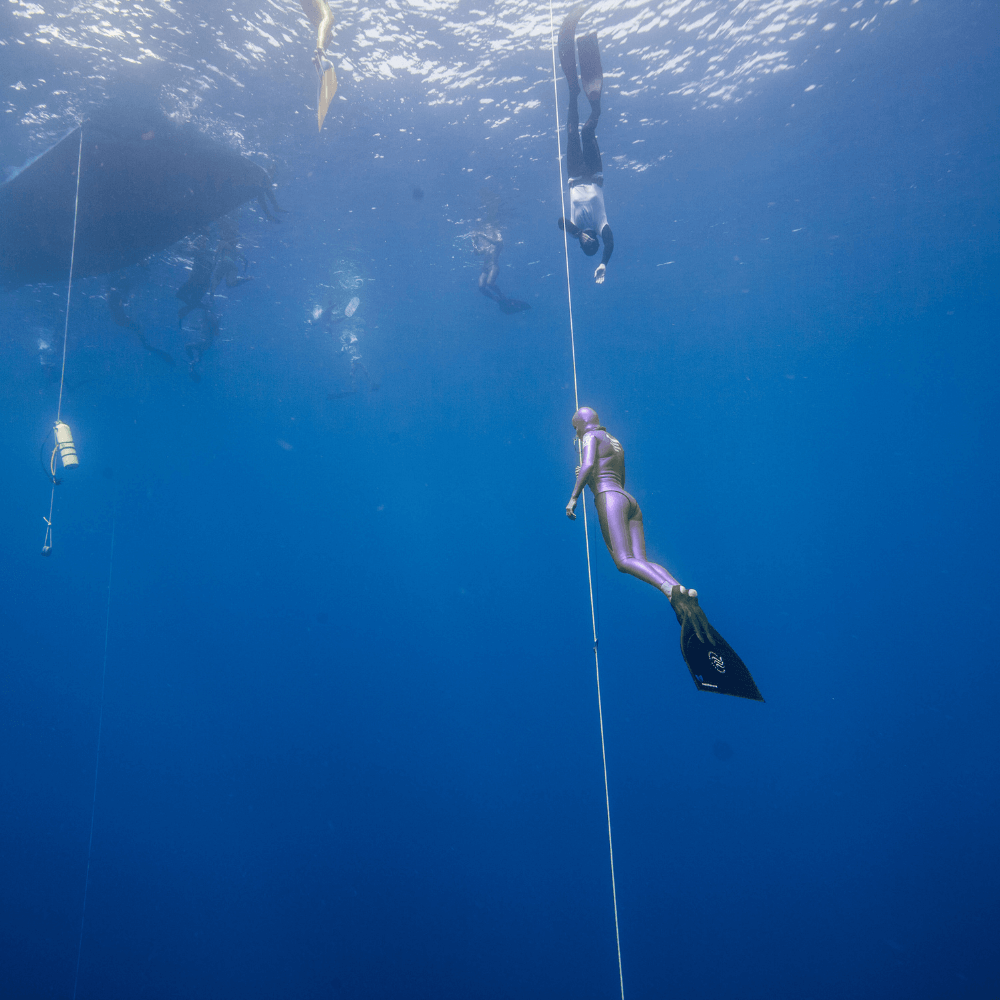
 At depth, our limits become clearer. Whether physical or mental, fatigue shapes how and when a dive unfolds. © Photo provided by Leena Oijala
How These Limits Reveal Themselves
Physical fatigue usually follows load. It correlates with stacked maximal dives or multiple diving days, inadequate sleep, illness or poor nutrition.
It feels structural – muscular heaviness or lactate burn appears earlier and overall efficiency or output drops.
Mental fatigue often announces itself before you even enter the water.
Warm-ups feel heavier than usual. Relaxation is harder to access. Internal dialogue grows louder.
Technique or glide discipline weakens, not because the body cannot produce force, but because perception or focus has drifted.
When They Compound
Freediving adds an important complication: apnea itself affects cognition.
Rising CO₂ and falling O₂ narrow executive control. If mental fatigue is already present, psychological capacity is reduced even further.
When mental and physical fatigue overlap, the outcome becomes predictable: effort rises quickly, focus narrows, technique deteriorates, decisions can become impulsive and the safety margin shrinks.
This state often appears during heavy training blocks, intense competition periods or emotionally demanding life phases.
It is not fragility. It is a cumulative strain.
The Reflex and the Risk
The instinctive response to fatigue is often more effort.
More discipline, more tolerance and more push.
Yet in healthy training, our interventions must match the source.
If the limiter is physical, the solution lies in increasing recovery time, managing training load and improving technique efficiency.
If the limiter is psychological, the solution lies in reducing mental load, simplifying training or life demands, and restoring psychological capacity. Or simply reintroducing playfulness.
Treating mental fatigue as a conditioning problem wastes energy. Treating physical fatigue as a mindset issue invites risk. Discernment is vital!
 The strongest divers are not those who push the hardest, but those who recognise what is limiting them and adjust with awareness. © Photo credit @behindthelens.laura.
Training with Awareness
Sustainable freediving presents an integration challenge.
Oxygen economy, neuromuscular efficiency, nervous system regulation, cognitive clarity and emotional steadiness all need to align for optimal performance and consistent training without burnout.
The strongest divers are not those who suffer the most.
They are those who recognise which system is limiting them and adjust accordingly.
Fatigue will always be part of freediving.
Knowing its source will make us wiser and healthier divers.
Freediving isn’t just about pushing limits — it’s about understanding them. Explore Molchanovs freediving courses and training programs including the Foundational Breathwork course designed to help freedivers progress safely, sustainably and with greater physiological awareness and psychological clarity.
Bevin Reynolds is a competitive freediver, counsellor and trauma-informed life coach whose work explores the intersection of peak performance, resilience and mental endurance in apnea sports. This article reflects the author’s perspective as both a freediving athlete and a trained psychology expert. It is intended for educational purposes and should not be considered medical or psychological advice.
About Molchanovs:
The Molchanovs Movement comprises a global community of passionate freedivers who have access to the latest freediving education with the Molchanovs Education System, Base Training workouts, badges and challenges, and exclusive early access and discounts on Molchanovs freediving equipment. The Molchanovs Movement is the first and only freediving system to create a professional and recreational freediving community built around certification courses, quality training, and providing high-quality gear that freedivers need.
Leave a comment