



How Your Menstrual Cycle Affects Freediving Performance

Understanding your menstrual cycle can help you make smarter decisions around when to push, maintain or recover in training.
By Tara Kate Rawson
Editor Zowie Palliaer
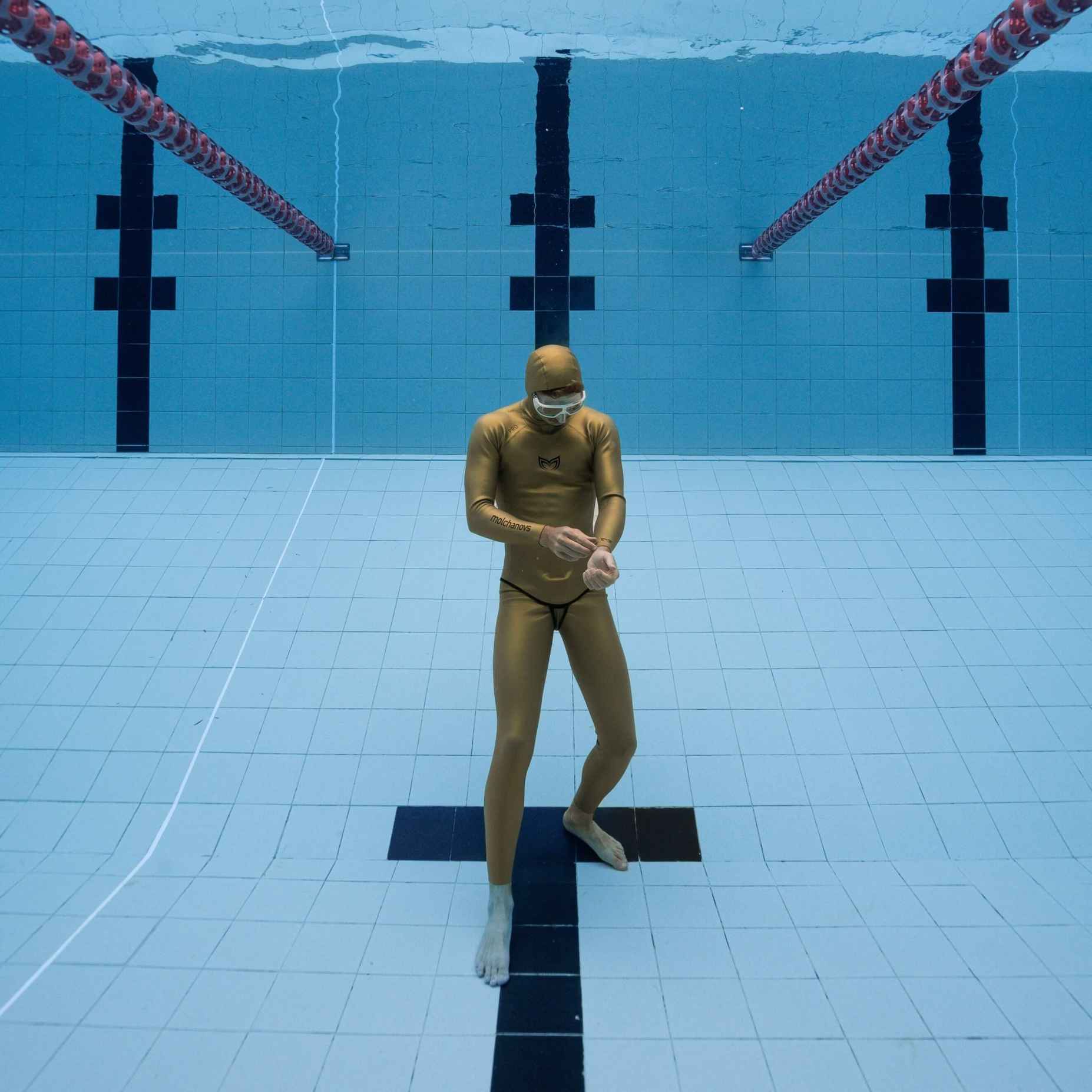
The menstrual cycle can be thought of as four internal seasons, each with different energy, recovery and nutrition needs. Photo © @andac.kazar.
As female freedivers, we’re pretty good at analysing dives. We adjust weighting, technique, body position, and equalisation. One week everything flows and the next week contractions arrive early, equalisation feels strange or sticky, and we quietly wonder what went wrong.
Oftentimes, nothing went wrong.
Hormones shift week to week, and those hormones quietly adjust your respiratory drive, nervous system, metabolism, gut function and fluid balance. Because freediving depends on relaxation, oxygen transport and efficient energy use, these changes influence how dives feel and how you should fuel. It’s not about limited capacity, it’s about understanding and respecting your body.
Disclaimer: this article uses menstrual cycle terminology. Not all people who menstruate identify as women, and not all women menstruate. The information applies to anyone with a menstrual cycle.
Understanding The Menstrual Cycle
Before we get into how your menstrual cycle affects freediving performance, let’s take it back to basics. Think of the menstrual cycle as four internal seasons:
- Winter
- Spring
- Summer
- Autum
Now, let’s break these down and look at how these seasons show up in our bodies and the nutritional adaptations we can make to support performance in each season.
 Menstrual cycle phases. Credit © BabyCenter.
Winter — Early Follicular Phase (Menstruation)
What’s happening to your body?
Day one begins with bleeding as the uterine lining sheds over roughly 3–6 days. Oestrogen and progesterone are at their lowest. Iron is lost through menstrual blood, prostaglandins increase uterine contractions, and fatigue, ‘period poos’ and cramps are common.
For freedivers, reduced iron availability matters because haemoglobin carries oxygen. Lower iron stores reduce oxygen transport and can increase perceived effort during breath-holds¹. I often notice dives feel quieter mentally but physically flatter during this phase, with an increase in bowel movements.
What are some nutrition adaptations you can make?
Iron intake becomes the priority because rebuilding haemoglobin supports oxygen capacity.
During menstruation, you want to focus on:
- Iron-rich foods such as red meat, dark fish and tofu
- Vitamin C foods, including citrus, berries and capsicum to improve iron absorption
- Vitamin B12 sources like eggs, dairy, fish and/or spiralia to support red blood cell production
Coffee, green tea and black tea contain polyphenols that reduce iron absorption and act as vasoconstrictors, which may worsen cramps². Having them at least one hour away from iron-rich meals improves absorption and often reduces jitteriness during an already sensitive phase.
Omega-3 fats from fatty fish, chia seeds and walnuts may reduce excessive prostaglandin production, helping ease cramps³. Magnesium sources such as pumpkin seeds, almonds and dark chocolate support muscle relaxation and may reduce menstrual pain⁴.
Energy needs are usually slightly lower, so emphasis shifts toward nutrient density rather than large carbohydrate loads. Wholegrains, legumes, vegetables and fruit support stable energy and gut health as the microbiome contributes to hormone metabolism.
Spring — Late Follicular Phase
What’s happening to your body?
Oestrogen rises steadily. Nervous system stability improves, recovery capacity increases and many divers feel calmer under breath-hold stress. CO₂ tolerance often feels better during this phase due to lower progesterone influence on the urge to breath⁵.
This is the phase where training adaptations often land most easily. Personally, new techniques and depth progressions tend to feel smoother here.
What are some nutrition adaptations you can make?
The body becomes more insulin sensitive under rising oestrogen, meaning carbohydrates are used efficiently for fuel⁶.
During the late follicular phase, you want to focus on:
- Wholegrain carbohydrates such as oats, rice, quinoa and legumes to replenish glycogen
- Fiber-rich plant foods support gut bacteria involved in hormone regulation
- Flaxseeds which contain lignans associated with healthy oestrogen metabolism⁷
Adequate carbohydrates and hydration remain important as training volume often increases naturally in this phase.
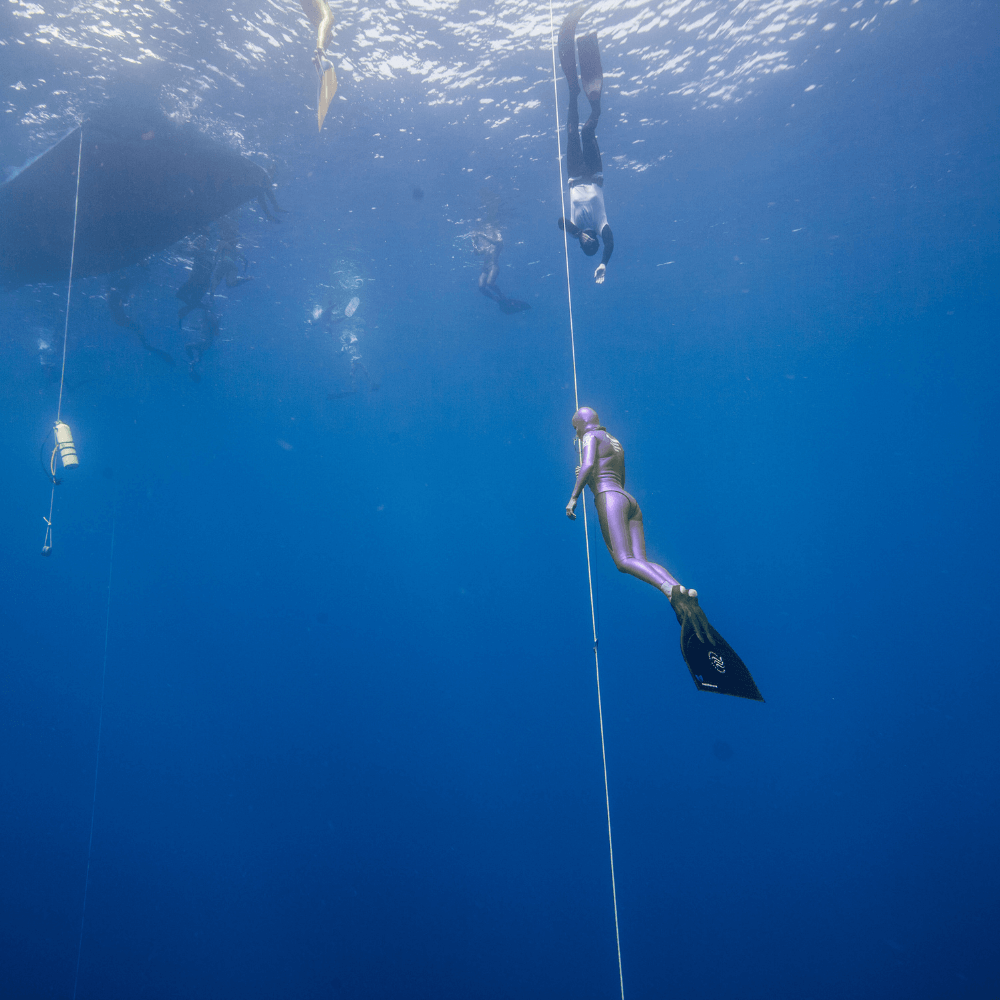
 Supporting the body through each phase of the menstrual cycle can help freedivers approach training with more clarity, patience and self-awareness. Photo © @junglefreediver.
Summer — Ovulatory Phase
What’s happening to your body?
Ovulation occurs as the egg is released. Oestrogen peaks and testosterone rises slightly, often increasing motivation, confidence and physical drive. Many divers feel strong, coordinated and socially energised.
What are some nutrition adaptations you can make?
Protein turnover and training output increase, so recovery nutrition supports adaptation.
During the ovulatory phase, you want to focus on:
- High-quality protein sources such as fish, eggs, dairy, soy and legumes to support muscle repair
- Antioxidant-rich foods, including berries, cherries and colourful vegetables to help manage exercise-induced oxidative stress⁸
- Zinc-containing foods like seafood, seeds and wholegrains to support hormone regulation and immune function
Carbohydrate needs may feel slightly lower than late follicular for some athletes, but adequate intake still supports nervous system function and heavy training days.
This phase often feels expansive. Using the energy for quality training while maintaining recovery nutrition prevents fatigue later in the cycle. So don’t skip the carbs!
Autumn — Luteal Phase
What’s happening to your body?
If fertilisation does not occur, progesterone rises and dominates. Core temperature increases and resting metabolic rate rises by approximately 2–10 percent⁹. Progesterone makes your body react more quickly to rising carbon dioxide, so the urge to breathe comes sooner¹⁰.
Breath-holds can feel harder even when performance capacity is unchanged. I notice contractions arrive earlier and dives feel more effortful.
Progesterone slows gut transit time, contributing to constipation and bloating, while hormonal shifts influence appetite hormones, making you feel hungrier to prepare you for a potential baby.
What are some nutrition adaptations you can make?
Energy requirements increase, sometimes by ~300 kcal/day⁹. Under-fuelling amplifies fatigue and cravings.
During the luteal phase, you want to focus on:
- Slow-release carbohydrates such as oats, sweet potato and wholegrains to stabilise blood glucose and support serotonin production
- Adequate protein intake to counter increased protein breakdown linked to progesterone
- Fiber sources, including berries, flaxseed, bran cereals, nuts and seeds to offset slower bowel motility (aim for around 25–30 g/day)
- Magnesium-rich foods and vitamin B6 sources (bananas, chickpeas, potatoes) are associated with reduced Premenstrual Syndrome (PMS) symptoms¹¹
- Omega-3 fats to support mood regulation and inflammation balance³
Water retention linked to hormonal shifts can worsen bloating. Emphasize minimally processed foods lower in sodium and include potassium-rich foods such as banana, leafy greens and sweet potato to support fluid balance.
 Nutrition isn’t just about fuelling training. It can also support oxygen transport, hormone metabolism, mood, gut function and recovery.
The Pattern Divers Notice
Now that we have a better understanding of how the menstrual cycle affects our body and the nutritional adaptations we can make, we can start to look at the patterns we might notice in our dive performance.
Across the four seasons:
- Winter rebuilds oxygen capacity.
- Spring supports adaptation.
- Summer expresses performance.
- Autumn requires stabilisation and slightly more fuel.
Your breath-hold changes across the cycle because hormones influence breathing drive, oxygen transport, temperature regulation and fluid balance. Nutrition supports each of these systems.
When dives feel different, the solution is rarely more discipline. It is usually a better interpretation of the body.
Tracking your cycle builds context around your dives. Logging the phase alongside symptoms, training, contractions and perceived effort allows patterns to emerge over time. This helps distinguish physiological variation from training adaptation or fatigue. Simple tracking through an app or training log can improve decision-making around when to push, maintain or recover, and allows nutrition to be adjusted to match the phase rather than applied uniformly.
Check out more nutrition insights from sports dietitian and Molchanovs athlete, Tara Kate Rawson, to help you improve your freediving performance. Subscribe to the Magazine for the latest articles, tips, stories and competition reporting.
About the Author
Tara Kate Rawson is an Accredited Sports Dietitian and freediving athlete who combines evidence-based nutrition science with real-world freediving experience to help athletes optimise underwater performance
Disclaimer: This article discusses general nutrition tips for freediving and is not a replacement for personalised medical or dietary advice. Every individual’s health and physical condition is unique—please consult a medical professional before implementing any nutritional changes related to freediving performance or safety.
References:
- Peeling P et al. Iron deficiency in athletes. Sports Medicine.
- Hurrell RF, Egli I. Iron bioavailability and dietary inhibitors. International Journal for Vitamin and Nutrition Research.
- Harel Z. Omega-3 fatty acids and dysmenorrhea. American Journal of Obstetrics & Gynecology.
- Gröber U et al. Magnesium in prevention and therapy. Nutrients.
- White DP et al. Ventilatory responses across the menstrual cycle. Journal of Applied Physiology.
- Hackney AC. Effects of oestrogen on metabolism. European Journal of Applied Physiology.
- Adolphe JL et al. Flaxseed and oestrogen metabolism. Nutrition Reviews
- Margaritelis NV et al. Exercise oxidative stress adaptations. Redox Biology.
- Bisdee JT et al. Energy expenditure during the menstrual cycle. British Journal of Nutrition.
- Dempsey JA et al. Hormonal regulation of breathing. Journal of Applied Physiology
- Wyatt KM et al. Vitamin B6 for premenstrual symptoms. BMJ.
Leave a comment