



How to Build an Effective Dry Routine for Freedivers: Part II

Every breath hold practice, including your dry ones, is a brick in the wall towards long term success in freediving.
By Gonzalo Cortes
Editor Deena Lynch
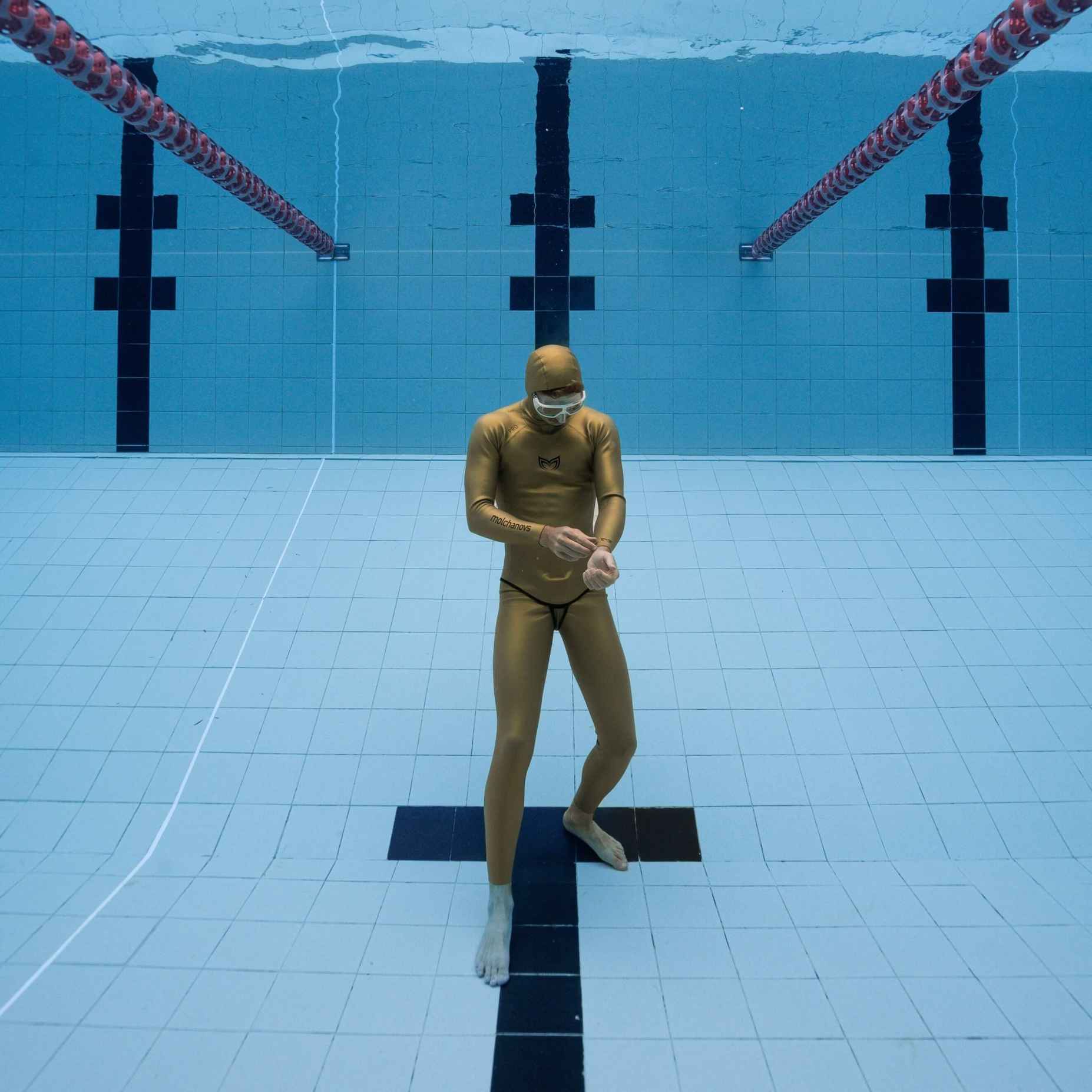
Molchanovs athlete Gonzalo Cortes prepares for a pool training session where consistent dry work meets time in the water. © Photo credit @theeditsuite
In Part I of How to Build an Effective Dry Routine for Freedivers, we talked about the importance of dry training in your regular routine and how to classify the different aspects of freediving training. You also had some good routines to start incorporating into your regular training. Now, we will talk about more advanced routines that are essential to evolve as an athlete and as a freediver.
Lungs Stretching Routine
Depending on your goals, focus on either empty-lung (diaphragmatic) stretches or full-lung (intercostal) stretches. To keep it simple, aim for an 8–10 minute routine using any exercises you’ve learned in your Molchanovs freediving courses (Uddiyana Bandha, Kapalabhati, breathing gymnastics, etc.)
Remember to only do lung stretching routines if you are Wave 3 certified or are under the guidance of a certified Molchanovs instructor. You’ll start to notice your failure depth increasing, and less chest tightness when taking your one full breath before a dive.
Pro Tip: Include some of the foundational breathwork during these exercises.
Aim for:
-
2 lung stretching sessions per week
You can:
-
Do full lung stretches the night before diving
-
Do empty lung stretches shortly before diving
Consistency is key. Write them into your routine so it becomes a habit. Your body will start associating stretching with diving, mentally and physically preparing you.

Strength and Conditioning
Often overlooked when starting, freediving is a sport that requires muscle.
The stronger your muscles, the less effort it takes to move efficiently underwater. These exercises can be done at the gym, with callisthenics, or even at home.
What matters is which muscles you are targeting. Cardio is useful, but freediving is mostly anaerobic, especially when kicking back from depth, so focus your training accordingly.
Prioritize:
Legs
-
Quads
-
Glutes
-
Hamstrings
-
Calves
-
Abductors (especially for no-fins)
Back & Core
-
Planks
-
Leg lifts
-
Rotational control
Pro Tip: Focus on quads and hip flexors for bi-fins and mono, and strengthen your back and intercostals for no-fins and free immersion.
Aim for:
-
2–3 sessions per week
-
Ideally, on diving days after your in-water training
-
Avoid heavy sessions before max attempts
These sessions can be taxing, so reduce intensity during peak periods and avoid doing them right before max attempts.
Breath-Hold Tables
If you’re training in depth or in the pool, you can add a morning session on days you’re not diving. A few long breath-holds are enough to maintain progress and help your MDR kick in faster.
If you’re not training in the water, you can focus on proper tables.
Step 1: Find Your Maximum Dry Breath-Hold
First, determine your maximum dry breath-hold. Once you know your limit, you can start building your tables to improve both tolerance and control.
CO₂ Table (Build Hypercapnic Tolerance)
Start with a hold at around 75% of your max time, and reduce the breathing interval by 15 seconds between sets, going from 2 minutes down to 30 seconds.
For example, if your max breath-hold is 2 minutes:
120’’ × 75% = 90’’
Your CO₂ table would look like this:
Hold Breathe
1:30 2:00
1:30 1:45
1:30 1:30
1:30 1:15
1:30 1:00
1:30 0:45
1:30 0:30
1:30 END
O₂ Table (Build Hypoxic Tolerance)
For the O₂ table, start holding 50% of your max time and increase the hold while keeping the breathing interval the same. So, for a 2-minute max:
120’’ × 25% = 30’’
Hold Breathe
0:30 2:00
0:45 2:00
1:00 2:00
1:15 2:00
1:30 2:00
1:45 2:00
2:00 END
For walking tables or apnea squat tables, follow the same structure, but instead of counting seconds, count steps or squats.
If this is your core work, aim for:
-
3–4 sessions per week
-
Prioritize CO₂ tables
Be careful where you practice, you don’t want to trip and fall.
 A bit of fun and a lot of discipline go into every training session. © Photo credit @theeditsuite.
Putting It All Together
Dry training is not optional if you want to grow; it is the foundation that supports your depth, your pool performance, and your confidence on the line.
You don’t need to do everything at once.
Pick the areas that matter most to you right now.
Build your routine.
Write it down.
Commit to it.
Small, consistent sessions done week after week will take you further than random bursts of motivation.
Train with intention.
Train with awareness.
Train dry so you can perform wet.

Example Weekly Structure
To build a balanced routine, include a mix of dry work alongside your regular diving schedule without overloading yourself.
For example, if you train in the pool twice per week, you might add:
-
2 dry table sessions
-
2 strength sessions
-
1–2 mobility or lung stretching sessions
-
1–2 visualization or meditation sessions
-
Dedicated rest and recovery
Sample Week
Monday Pool session + lung stretching
Tuesday Morning dry tables + afternoon strength session
Wednesday Visualization or meditation + rest
Thursday Pool session + lung stretching
Friday Morning mobility + afternoon strength session
Saturday Dry tables
Sunday Full rest
Depth Training Cycle Example
If you’re training for depth and following a 3-days-on / 1-day-off cycle, it could look like this:
Day 1 Depth session (morning) + strength (afternoon)
Day 2 Depth session (morning) + mobility (afternoon)
Day 3 Lung stretching (pre-dive) + depth session (morning) + rest (afternoon)
Day 4 Full rest + visualization
Then repeat the cycle.
Now stop reading, go write your schedule and start training. Good luck!
Want more freediving pro tips from elite athletes straight into your inbox? Subscribe to the Magazine for access to the latest articles, advice, stories, gear, news and competition reporting.
Leave a comment