



Freediving Is Not About Relaxing It’s About Regulation

Why staying calm under stress is the real skill of freediving — and five ways to train it.
By Bevin Reynolds
Editor Deena Lynch
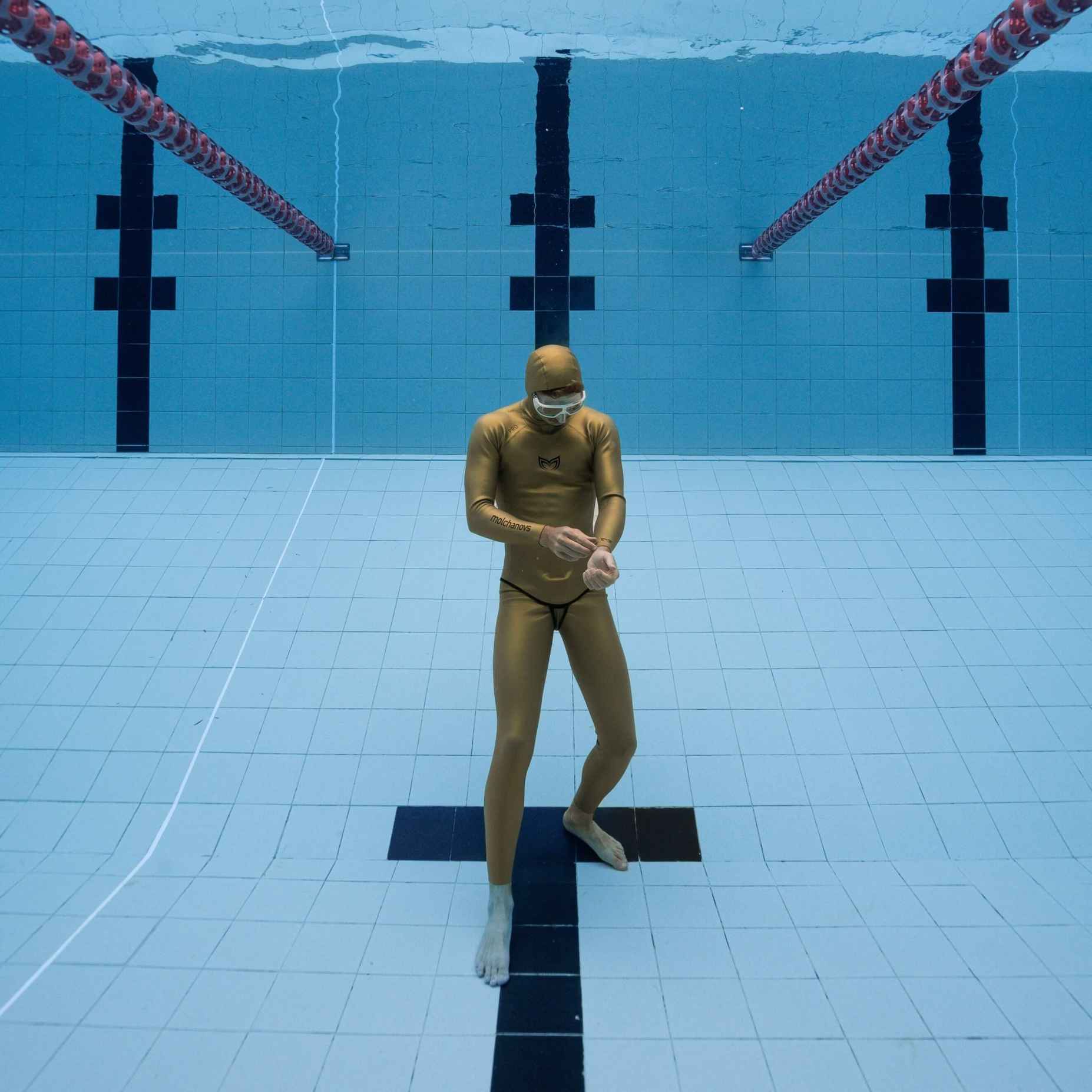
Relaxation is where the dive begins, but it’s not where it is tested. © Photo provided by Leena Oijala.
Freediving is often described as a sport of relaxation. From the outside, that makes sense – freedivers often move slowly and appear calm and quiet in the water. We breathe up, become still and slip beneath the surface with an unusual ease.
But that is only part of the story. Yes, freediving requires relaxation. Tension wastes oxygen, and panic affects our body and our mind. A tight jaw, a busy mind and unnecessary muscular effort can make a dive harder than it needs to be. So yes, relaxation matters.
Relaxation Is Only the Beginning
Freediving also asks for something more difficult: the ability to stay calm as stress rises.
This is one of the less obvious truths at the heart of our sport. Freediving is not simply about feeling peaceful when everything is easy. It is about staying steady when our body starts getting louder – as the urge to breathe builds, discomfort increases and our minds start offering increasingly unhelpful commentary, our main task is finding ways not to unravel. In other words, freediving is generally not the absence of stress. It is an invitation to meet stress without adding unnecessary struggle on top of it.
That is why “just relax” is both useful and incomplete advice. It is easy to relax at the start of a dive – when you are fresh, still and comfortable. It is much harder to remain calm once the body starts signalling that it wants to release the built-up CO2. This is where many freedivers get caught out. They think the goal is to feel nothing. It is not. The goal is to feel what is happening without immediately reacting with fear, tension or resistance.
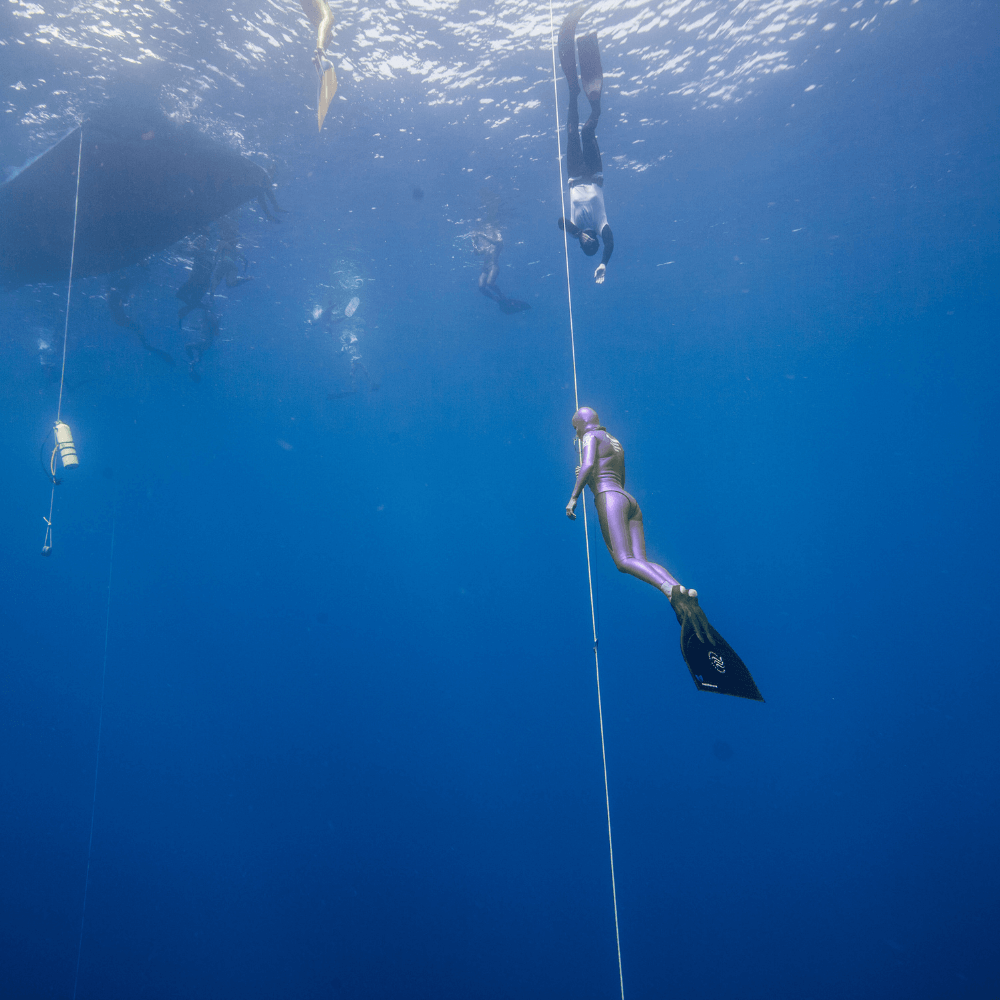
 Stillness is easy at the surface. The real skill is carrying it with you as the body begins to speak. © Photo credit @seawater_uw_photographer
The Real Skill of Freediving
The body is not being “dramatic” during a breath-hold. It is doing its job. Sensations build and signals intensify. The urge to breathe becomes more noticeable. None of that necessarily means something has gone wrong. It means the body is trying to get your attention. Our troubles start when our mind interprets these signals as a threat or as danger.
For a newer freediver, discomfort can trigger a chain reaction very quickly. A sensation appears. The diver tenses. That tension makes the experience feel worse. The experience feels worse, so the alarm increases. Quickly, the problem is no longer just the breath-hold itself. It is the diver’s reaction to it. More experienced divers are not the ones who feel the least. They are often the ones who have learnt to react less intensely, and that is an important difference.
Calm Is Not Collapse
A good dive is not sensation-free or numb. It is also certainly not passive, floppy, vague or half-asleep. Good freediving involves a unique kind of alert calmness. There is softness, yes, but also structure. We are tuned in, organised and responsive. Calm, in this context, is not collapse. It is composure.
This is also one of the reasons freediving can be so compelling. It teaches us something bigger than breath-holding. It reveals the quality of our relationship with discomfort…
Are you able to stay present when things become intense?
Or do you immediately brace, resist or sprint for the exit?
Freediving has a way of making that answer very clear.
So, if freediving is about staying steady under rising stress, then that is a skill that we can deliberately train. Not in a reckless way by pushing beyond safe limits. But by learning, over time, how to reduce unnecessary friction created by our mind’s interpretation of our body’s discomfort.
 Regulation starts with awareness; noticing where we hold tension, and learning to let it go.
5 Ways to Stay Steady Under Stress
1. Notice where you add tension.
Many divers waste energy in the face, jaw, shoulders, hands, or belly long before they realise it. If those areas tighten the moment discomfort appears, oxygen use rises, and the dive becomes harder. Learning to scan for unnecessary tension sounds simple, but it can be tricky. Yet a skill worth working on!
2. Change the story you tell yourself.
Pay attention to the story you attach to the sensation. The story might be: “This is uncomfortable!” And then “I can’t do this”, “I need to stop”, or “Something is wrong”. These kinds of stories increase our inner distress. They make the dive experience feel a lot more threatening than it is. A steadier response is usually more useful: “This is strong, but familiar,” “this is uncomfortable, not dangerous,” or “I am safe, I can do hard things.” You might want to create your own coping statements to practice every training session. Think: less reactivity, more accuracy.
3. Train your recovery.
Train recovery between efforts. Many freedivers focus only on the dive itself, but calm is also visible in recovery.
Can you settle properly between dives?
Can your breathing become quiet again?
Can your body come down, or are you carrying tension from one dive into the next?
4. Build comfort with discomfort gradually.
Freediving should never be about glorifying suffering or proving toughness. That is a fast route to poor judgment. But safe, progressive exposure to discomfort matters. The more familiar certain sensations become, the less likely you are to panic when they arrive.
5. Keep your technique when the dive gets hard.
Many dives unravel not because the body suddenly becomes incapable, but because we’ve lost some technical efficiency. Staying technically tidy under pressure is part of staying calm.
What Freediving Really Asks of Us: Regulation
We can even say that relaxation, while essential, is too small a word for what freediving really requires. A better word might be regulation. Regulation means you can feel the body’s signals without being ruled by them. It means you can stay composed without becoming passive. It means you can remain responsive as stress rises, rather than needing ideal conditions to access calmness. That is a more useful kind of steadiness.
 Freediving teaches us more than breath-holding, it teaches us how to stay steady and calm. © Photo credit @deenajonze
Beyond the Water
And it reaches well beyond the water. Most of us are calm when life is easy. Far fewer stay calm when life becomes intense, uncertain or uncomfortable. Freediving trains that capacity in a very direct way. It does not ask whether you can be peaceful in perfect conditions. It asks whether you can stay organised when the pressure builds.
That is part of what makes freediving so powerful and so beautiful! It is not just about holding your breath. It is about learning how to meet intensity without immediately fighting it.
Want to develop this steadiness in your own diving? Freediving courses and training programs from Molchanovs combine physiology, technique and mental training to help divers build calm, efficiency and awareness in the water.
Explore guided Molchanovs courses and programs designed to help you progress safely and sustainably.
Bevin Reynolds is a competitive freediver, counsellor and trauma-informed life coach whose work explores the intersection of peak performance, resilience and mental endurance in apnea sports. This article reflects the author’s perspective as both a freediving athlete and a trained psychology expert. It is intended for educational purposes and should not be considered medical or psychological advice.
About Molchanovs:
The Molchanovs Movement comprises a global community of passionate freedivers who have access to the latest freediving education with the Molchanovs Education System, Base Training workouts, badges and challenges, and exclusive early access and discounts on Molchanovs freediving equipment. The Molchanovs Movement is the first and only freediving system to create a professional and recreational freediving community built around certification courses, quality training, and providing high-quality gear that freedivers need.
Leave a comment