

Freediving Instructor vs Coach: What’s the Difference?

Coach and instructor may sound similar, but in freediving they come with very different responsibilities.
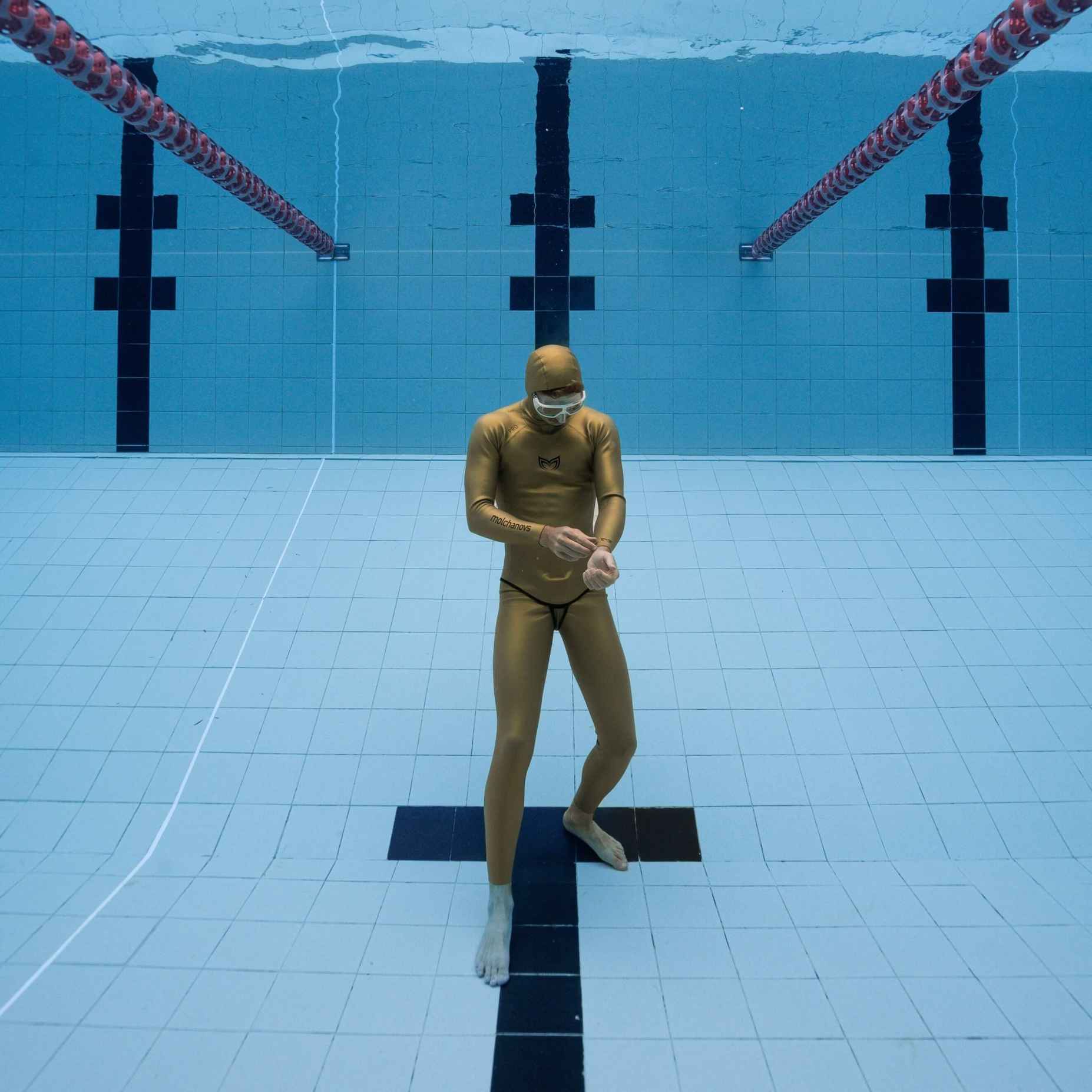
Learning safely starts with knowing who is actually qualified to teach you. Photo credit © @akivis.
In freediving, you’ll hear plenty of titles: instructor, coach, trainer, guide, buddy. Sometimes they’re used interchangeably, but they don’t all mean the same thing.
For an experienced freediver, the difference may be obvious. For someone taking their first course, it often isn’t.
What’s important to remember is that being good at freediving is not the same as being qualified to teach it. An experienced athlete, training partner, or local guide may have valuable knowledge to share, but teaching freediving safely requires a specific set of skills, standards, and responsibilities.
So what exactly is the difference between a freediving instructor and a coach, and how can you tell who is actually qualified to teach you?
What is a Freediving Instructor?
A freediving instructor is trained to teach structured skills safely and progressively within a recognized education system.
For a beginner, that includes everything from breathing and relaxation foundations to equalization, duck dives, finning technique, buoyancy and weighting, buddy procedures and rescue skills.
But an instructor’s role goes beyond demonstrating how to perform a skill.
They need to know how to explain it clearly, recognize when a student is struggling, adapt their teaching, organize safe sessions, supervise students in the water, assess performance, manage risk, respond to emergencies, and only certify someone when they have met the required standard.
Within the Molchanovs education system, instructors teach according to an established curriculum and must maintain an active instructor status in order to teach and certify Molchanovs students. For a deeper look at the training and standards behind the qualification, read What Does It Take to Become a Molchanovs Instructor?.

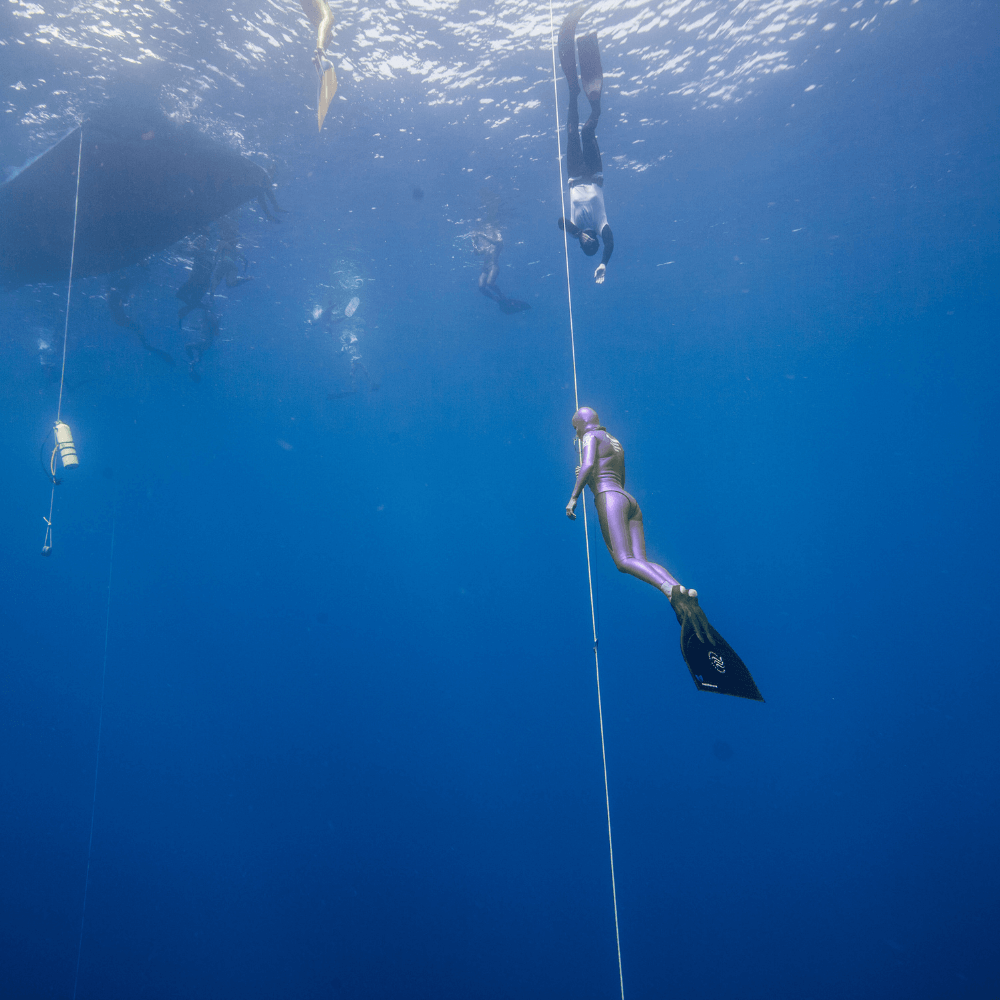
Experience underwater is valuable, but it isn’t the same as being qualified to teach. Photo credit © @morganbourchis and @mathieu_blanchard.
What is a Freediving Coach?
A coach typically works with a freediver who already has the foundational skills in place and wants to improve their performance.
Rather than focusing on whether someone can safely perform a skill for the first time, coaching may look more broadly at areas such as:
-
Training structure and periodization
-
Technique refinement
-
Strength and mobility
-
Recovery
-
Sleep and nutrition
-
Mental preparation
-
Competition strategy
-
Long-term performance progression
In other words, an instructor may be asking, “Can this student perform this skill safely and correctly?”
A coach is more likely to be asking, “How can we help this freediver perform better?”
Both roles are valuable. They simply serve different purposes.
Why does it matter?
The difference is especially important when someone is new to freediving.
A beginner may not yet know what qualifications to look for, what safe instruction should involve, or whether the person offering to “coach” them is actually qualified to teach foundational skills.
The issue is not with qualified freediving coaches. A highly experienced coach will generally have a strong instructional foundation alongside additional knowledge of performance development.
The concern is when the title “coach” is used as a substitute for instructor certification.
Coaching is not a shortcut around becoming qualified to teach.
Someone can have significant freediving experience and still not have been trained or assessed in teaching, student supervision, rescue procedures, risk management or education standards.

Instructor, coach, guide, buddy; the title matters when you’re trusting someone to teach you underwater. Photo credit © @kenyashiro.
When “coach” becomes a vague title
In some freediving communities, the word “coach” is used very casually.
It might refer to someone who organizes training, gives technique tips, guides people during depth sessions, or simply has more experience than the divers around them.
That person may be:
-
A strong freediver
-
A competitive athlete
-
A helpful buddy
-
A local guide
-
A regular training partner
They may even be extremely knowledgeable.
But none of those things automatically make someone qualified to teach a freediving course.
Teaching is its own skill set. It comes with a different level of responsibility because the instructor is not simply looking after their own dive. Above all else, they are responsible for creating a safe learning environment for their students.
What about coaching sessions, training and guided dives?
Certified freedivers may train together. More experienced divers may share advice with their buddies. A guide may take certified divers to a local dive site. An athlete may work with a coach to prepare for competition.
Those situations are different from teaching someone foundational freediving skills for the first time.
A training session is not automatically a course. A guided fun dive is not the same as formal education. And a coaching session should not be presented as a replacement for beginner instruction.
Problems arise when those lines become blurred and a new freediver does not realize there is a difference.
If you are learning the foundations of freediving, you should know exactly who is teaching you, what qualification they hold, and whether they are currently authorized to teach the course being offered.

A quick instructor check can give you confidence before you ever get in the water. Photo credit © @andac.kazar.
Check your instructor before you book
If someone is offering you a Molchanovs freediving course, take a few seconds to verify them using the Molchanovs instructor search.
Active Molchanovs instructors who are currently authorized to teach should appear there. If they don’t, they’re not currently authorized to teach Molchanovs courses.
A coach, guide, buddy, athlete, or experienced freediver can all play valuable roles, but they are not substitutes for a qualified instructor when it comes to teaching a course.
For a step-by-step walkthrough, see our How to Check Your Freediving Instructor guide. Before you book, check your instructor. And remember, verified above means you’re safe below.
Leave a comment