



How Kirsty Muir Uses Freediving to Compete at the Winter Olympics

Winter Olympian Kirsty Muir is using freediving to gain a competitive edge at Milano Cortina 2026.
By Deena Lynch
Kirsty Muir takes to the Winter Olympic stage with calmness. © IOC / Getty Images.
The 2026 Winter Olympics brings the world back to Italy’s alpine terrain, blending urban Milano energy with the historic mountain venue of Cortina d’Ampezzo.
Freestyle skiing has grown rapidly since its Olympic introduction, capturing younger audiences and evolving into one of the Games’ most visually dynamic disciplines. Slopestyle, big air, and halfpipe demand creativity and psychological resilience as much as physical strength.
When most people think of elite winter sport, they picture explosive movement, high consequence tricks, and adrenaline-fuelled action. It’s far from the imagery of stillness.
But for Scottish freestyle skier Kirsty Muir, stillness has become a competitive advantage and she first found that underwater.
 Great Britain’s Muir uses freediving skills as one of her performance tools. © British Olympic Association.
Muir shared in an interview with The Sports Agents how her coach arranged a freediving course for her and two teammates as part of their mental performance training.
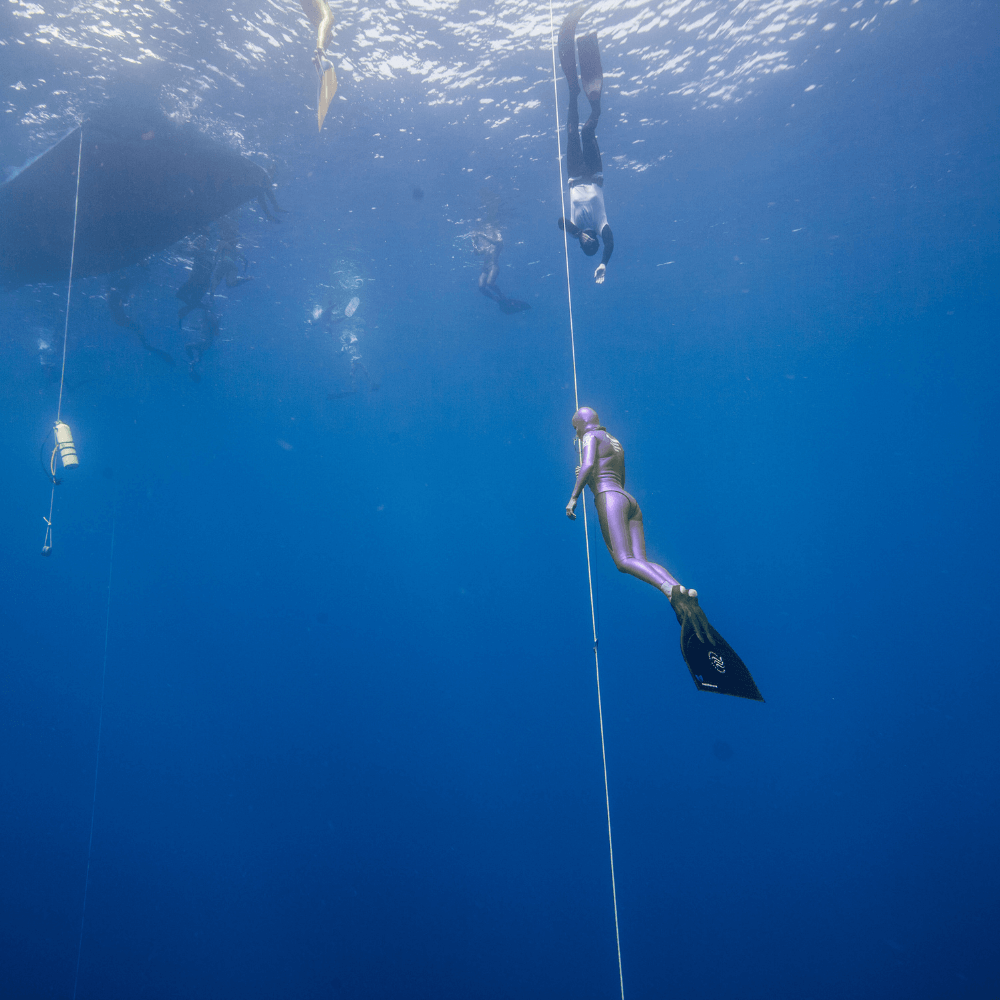
“We went to Cornwall and did this freediving course and it was really, really cool,” she said. “We started off just breathing, just lying down on the floor. Then we went to a tub and did static breath holds, and then we went into the quarry and went down to kind of 15 meters.”
What began as simple breath awareness on the floor progressed to static holds and, eventually, depth in open water mirrors the structure of Molchanovs freediving courses.
As the world turns its attention to the 2026 Winter Olympics in Milano and Cortina d'Ampezzo, stories of marginal gains, mental resilience, and cross-training innovation are everywhere. Among them is a quietly powerful thread: freediving.
From Slopestyle to Stillness
Freestyle skiing, particularly slopestyle and big air, demands split-second decisions while rotating at speed above icy landings. Athletes must be powerful, precise, and psychologically steady under immense pressure.
Muir, who represents Great Britain, has spoken openly about the intensity of competition at the Olympic level and how freediving has helped her regulate that intensity.
In a recent interview, she explained:
“Freediving really helps me slow everything down. It’s about being calm in your mind and your body.”
That ability to consciously downshift the nervous system is not abstract. Heart rate spikes. The breath shortens. Thoughts race.
If you’re already a freediver, this all sounds familiar. If you’re yet to be enticed into the underwater world, freediving offers a direct counterbalance.
Instead of amplifying adrenaline, uniquely, it trains the opposite response: learning to downregulate.
Breath control, CO₂ tolerance, and parasympathetic activation are not abstract concepts underwater but are survival tools. In the mountains, they become performance tools.
For an athlete preparing for Milano Cortina 2026, that’s another trick up the sleeve.
Haven’t heard of freediving? You can learn more about what freediving is all about here.
The Science of Calm Under Pressure
Freediving is not just about “holding your breath.” It is systematic training in:
- Nervous system regulation
- CO₂ tolerance and breath efficiency
- Focus under stress
- Body awareness and relaxation
At its core, freediving strengthens the body’s response to elevated CO₂ which is the same physiological trigger that causes panic in high-pressure situations. When you train breath-holds safely and progressively, you teach your nervous system that discomfort is not danger.
These qualities translate seamlessly into freestyle skiing.
On the start gate, heart pounding before a run, the ability to consciously slow your breath can shift physiology within seconds. Freedivers train this repeatedly: inhale, soften, surrender tension and expectation, stay present.
Muir has described how the discipline helps her reset before competition:
“It’s about staying relaxed when things feel intense. You learn to be comfortable in discomfort.”
For a skier standing above a 60-foot kicker, that skill can be the difference between reaction and composure. Freedivers practise staying relaxed in rising discomfort. If you’ve ever felt that hesitation before takeoff or attempting a final trick, that overlap between the two sports is obvious.
 Stillness on the slopes begins below the surface.
Muir is not alone in exploring freediving as a complementary discipline. In the 2023 season of Formula 1: Drive to Survive, Mercedes racing driver George Russell turned to freediving as part of his mental performance toolkit to regulate stress and reset away from the intensity of F1.
Across elite sport, breathwork is becoming mainstream but freediving offers something deeper than box breathing between sets. It’s not about chasing depth records. There are no crowds, no scoreboards, no timing splits. Underwater it is all about the breath and the absence of it. It’s about mental clarity.
The Science of Calm Under Pressure
The visibility of a Winter Olympian using freediving as part of her training ecosystem matters. It introduces apnea training to entirely new audiences such as winter sport fans, young athletes, and performance-focused communities.
Freediving is not only a competitive sport. It is a tool for regulation, resilience, and performance.
For Muir, that first freediving course doesn’t feel like a one-off experiment.
“I’d love to do it again,” she said. “Hopefully my coach is going to keep going with it and kind of get more people involved, more other athletes from the team, and maybe I’ll go and join another one.”
If you’re interested in exploring breathwork more deeply, learning directly from 41x World Champion freediver Alexey Molchanov in his Foundational Breathwork course is a powerful place to begin.
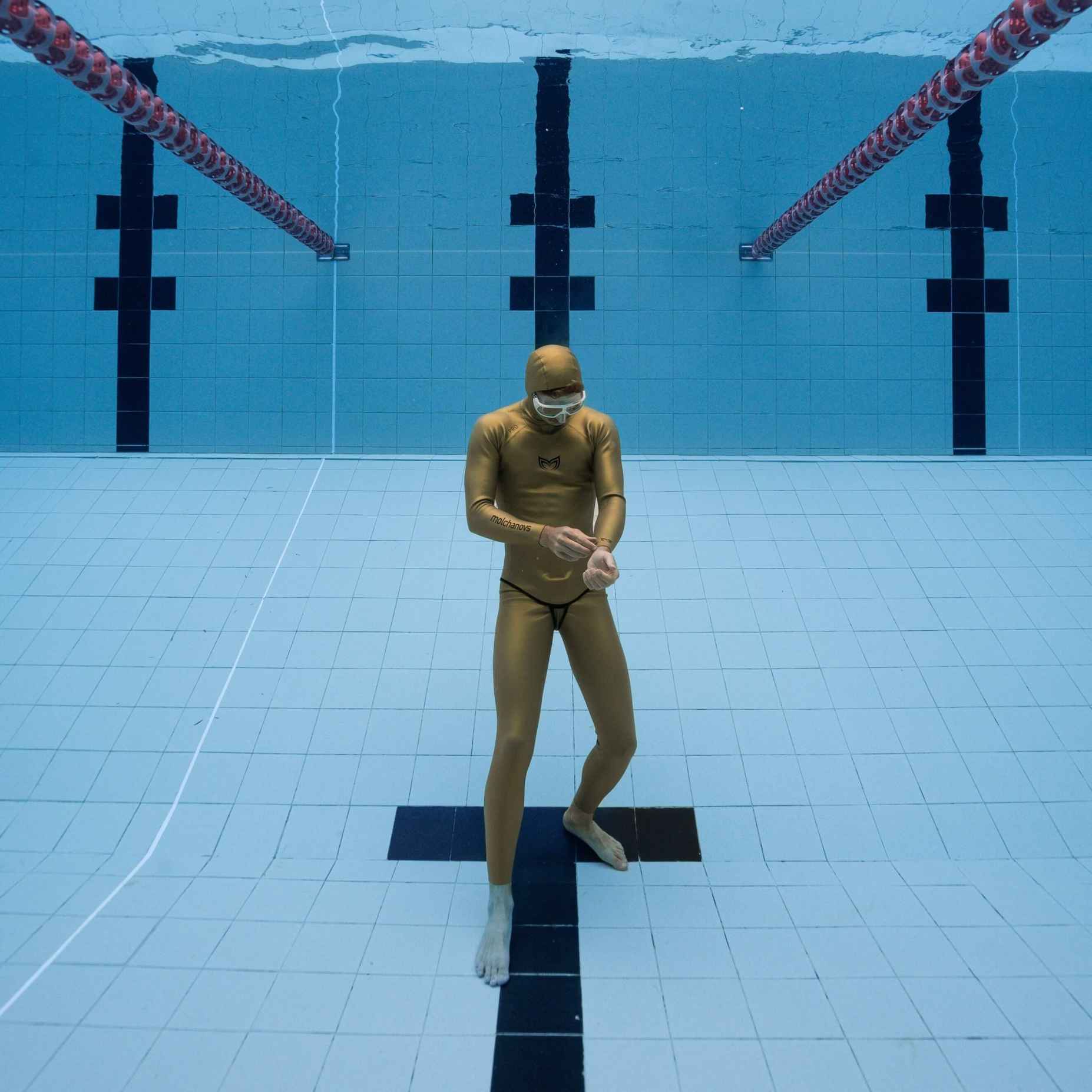
For those ready to enter the water, structured education is key. Starting with a Molchanovs Wave 1 Freediving Course ensures that breath-hold training is safe, progressive, and grounded in strong technique.
You can even begin from home with the Beginner Online Freediving Course before transitioning into in-water training.
Beyond Medals at the Winter Olympics 2026
Whether or not medals follow in Milano and Cortina, the broader story is compelling: elite athletes are looking underwater to find stillness above ground.
In a sporting world that celebrates bigger, faster, higher, it is quietly radical to train softness.
Freediving teaches surrender not as weakness, but as empowered strength and control. And perhaps that is the real crossover between snow and sea.
Learn freediving between snow seasons with the Beginner Online Freediving Course or go straight into signing up for a Molchanovs Wave 1 Course at your nearest location here.
About Molchanovs:
The Molchanovs Movement comprises a global community of passionate freedivers who have access to the latest freediving education with the Molchanovs Education System, Base Training workouts, badges and challenges, and exclusive early access and discounts on Molchanovs freediving equipment. The Molchanovs Movement is the first and only freediving system to create a professional and recreational freediving community built around certification courses, quality training, and providing high-quality gear that freedivers need.
Leave a comment