

Freediving Tips to Prevent Congestion & Equalization Issues

Congestion may lead to equalization challenges, but there’s something you can do about it.
By Jeremy Storton
Edited by Deena Lynch
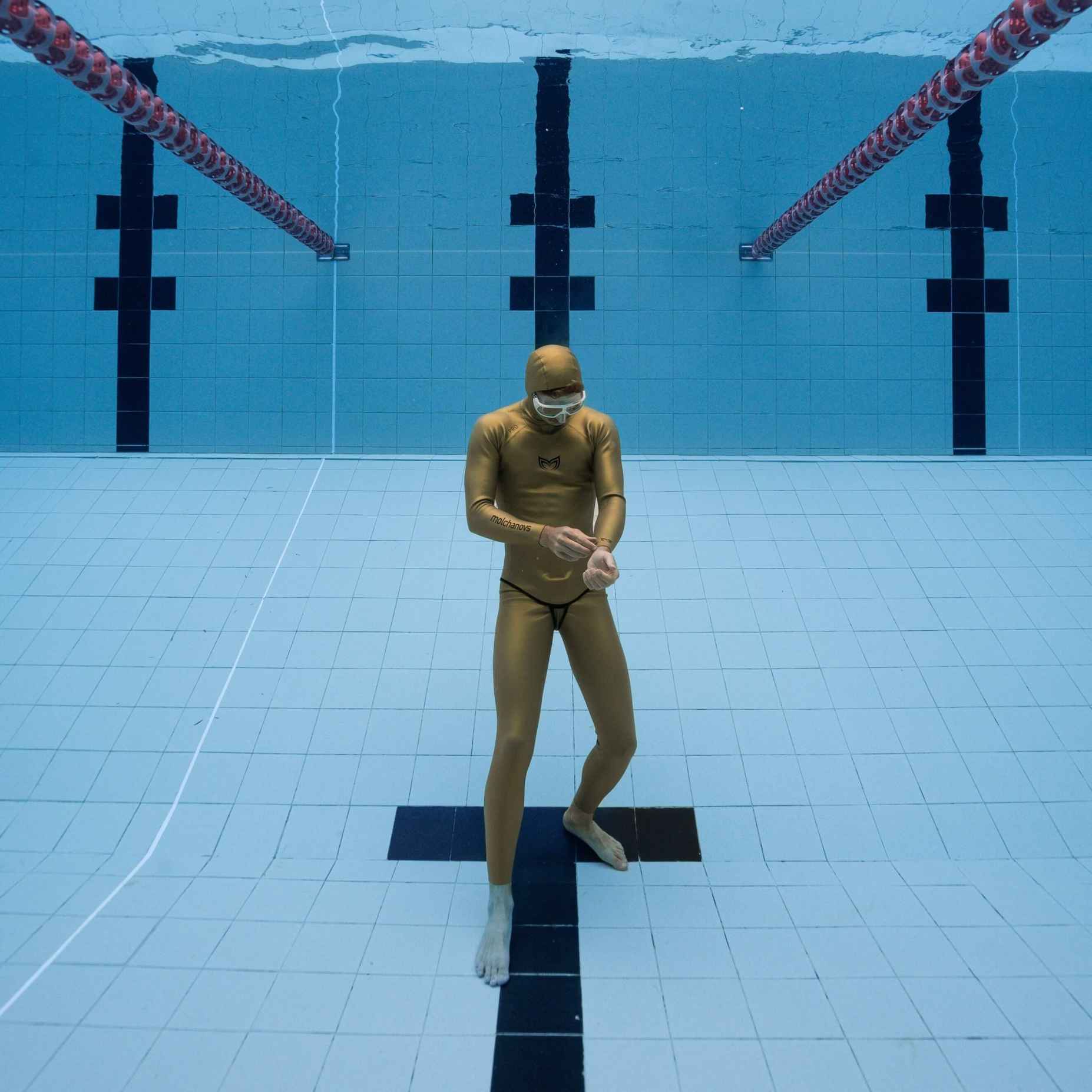
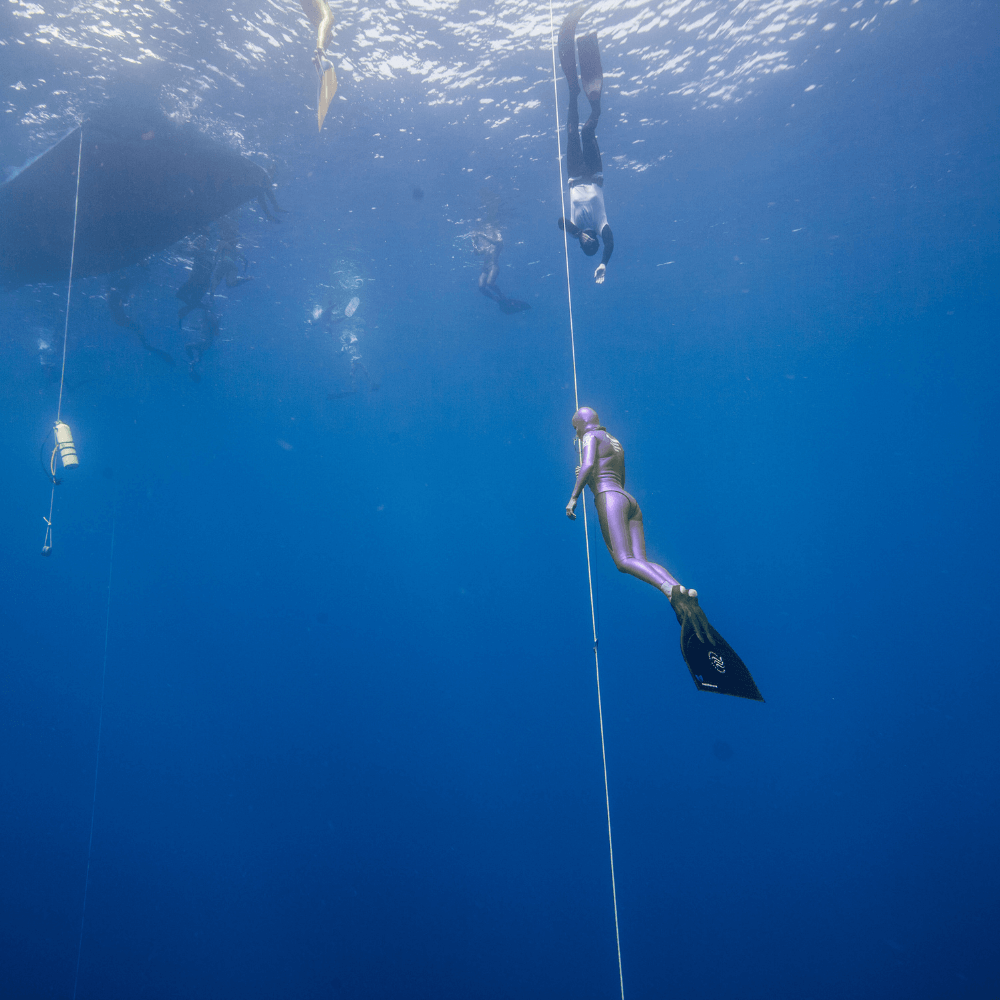
Photo credit © @morganbourchis & Mathieu Blanchard.
Difficulty equalizing is the most common reason students struggle in freediving courses. While learning proper Frenzel technique solves many issues, even skilled equalizers can hit a wall when congestion comes into play.
Congestion and equalization issues often arise from two main factors: inflammation and mucus buildup. These can occur when you’re sick, dealing with allergies, reacting to environmental irritants, eating certain foods, experiencing hormonal changes, or simply not staying hydrated. A third category, anatomical issues, may also be involved in rare cases and often requires assessment by an ENT specialist. But let’s start with the first two.
Basic Anatomy: Why Sinuses and Ears Matter in Freediving
Our sinuses are hollow cavities in the forehead and cheekbones that help humidify incoming air, filter impurities, and regulate pressure changes within the nasal cavity. But equalization is not only about the sinuses, as the ears and the Eustachian tubes play an equally critical role.
The Eustachian tube is a narrow canal connecting the middle ear to the back of the throat. Its job is to open and allow air into the middle ear so that pressure inside the ear matches the increasing pressure during descent.
The mucus membranes of the nose, sinuses, and middle ear are all connected, which means inflammation in one area often affects the others
If you feel pressure or discomfort in the forehead, cheekbones, or inside the ears that doesn’t improve with equalization, you are likely experiencing congestion or swelling in one or more of these connected areas. That is normally your cue to stop diving for the day.

Why Congestion Happens
1. Inflammation
Inflammation of the sinuses, nasal tissues, or the Eustachian tube itself can all interfere with equalization.
Sinusitis, allergies, colds, or environmental irritants cause the lining of the nose, sinuses, and middle ear to swell. Because these mucous membranes are continuous, swelling in one area often narrows the passages elsewhere. These tissues swell in response to:
- infections
- pollen, dust, mold
- smoke or pollutants
- food sensitivities
- irritants in the environment
When the Eustachian tube cannot open properly, it becomes difficult, or impossible, to equalize. This is why even mild inflammation of the nose or ears can cause freedivers trouble.
Eustachian Tube Blockage
Swelling or retained mucus narrows the tube and prevents air from reaching the middle ear. Even tiny increases in swelling can obstruct the tube because it is naturally very narrow.
Difficulty Opening the Tube
The tube must open during descent to allow air into the middle ear. When inflamed, it becomes stiff, sticky, or swollen shut, meaning the diver can’t equalize effectively.
Risk of Barotrauma
If equalization fails, pressure builds up against the eardrum, leading to:
- middle ear “squeeze”
- pain and bruising of the eardrum
- fluid buildup
- in severe cases, a ruptured eardrum
Diving with inflamed ears, sinuses, or nasal passages drastically increases this risk.
 Smart freedivers equalize early, often, and never through congestion. © @morganbourchis & Mathieu Blanchard.
2. Mucus
Mucus traps irritants and pathogens before they reach deeper into the respiratory system. But too much mucus, or mucus that is thick, sticky, or poorly drained, can block the sinus openings and the Eustachian tube, or act as a one-way valve, allowing air to enter but preventing it from escaping.
This can lead to a painful phenomenon known as a reverse block on ascent. Even if you manage to equalize on the way down, trapped air on the way up can cause sharp sinus or ear pain.
3. Dehydration
Dehydration can make this problem even worse. When we are well hydrated, our tissues tend to be more slippery. When we are dehydrated, our tissues can become more irritated and sticky, which holds on to the mucus and may even make our Eustachian tubes harder to open. Dehydration also leads to impaired cilia function (the small hair-like structures that remove mucus from our passages) and thicker, sticky mucus that is harder to move.
4. Anatomical Congestion
Although rare, some divers experience chronic congestion due to the structure of their unique anatomy and airways. Examples include:
- deviated septum
- enlarged turbinates (leading to smaller air passages)
- narrow sinus openings naturally small Eustachian tubes
- scar tissue from past infections or forceful equalization
- Surfer’s ear (abnormal bone growth in the ear canal)
Divers with these issues often have persistent difficulty equalizing and may require evaluation from an ENT (Ear, Nose and Throat Specialist Doctor). In more severe cases, surgical correction may be recommended.
This is why freedivers should never forcefully equalize their ears, as it can cause irreparable damage and impact our ability to freedive.
How to Reduce Congestion Before Diving
Freedivers ought to know the rules of freediving, which are to never dive alone and never dive when sick and congested.
However, where never diving alone is an absolute, never diving congested is more nuanced. Sometimes there are safe, effective ways to reduce it but sometimes diving simply isn’t worth the risk.
Rest and Skip the Dive
First and foremost, the safest and often the wisest option is to skip diving for the day. Use this day for hydrating, yoga or stretching, visualization, breathwork or recovery. Your future dives will be better for it. If you are in the throes of sickness and congestion, there may be nothing you can do to salvage a dive day. If you are only mildly congested, there are several strategies that may help clear your airways enough to dive safely.
For Mild Congestion
Nasal Rinsing
This is a simple over-the-counter medical option where you rinse your nasal passageways with a prepared saline solution. The goal of this is to remove mucus and reduce inflammation by pulling fluid from your tissues through diffusion due to the salts. Nasal rinsing products vary and are generally easy to find. Ensure you use the correct amount of distilled water for the prepared saline packet. This reduces your risk of infection and ensures the saline balance is correct for your tissues.
Steam Inhalation
People have used steam inhalation to clear sinuses for a long time. Some methods include boiling a pot of water, removing it from the heat, and then leaning over the pot with a towel draped over your head to breathe in the warm and extremely humid air. This hydrates and loosens mucus and may clear the sinuses enough to dive.
Massage and Stretch
Doing a series of neck and throat stretching accompanied by facial massage may help release mucus. For example, you can stretch your neck from side to side; stretch your throat by opening your mouth wide, sticking your tongue out, and moving your jaw from side to side; stretching your external ear, outward, back and down; and massaging the area between your nose and your cheekbones to stimulate blood flow and hopefully a release of congestion. This may not work for everyone, but anyone can try these techniques anywhere.
Hydration
Sometimes prevention is a better cure. No matter the outdoor activity, general advice is to stay hydrated. When you are well hydrated, mucus is thinner and easier to remove.
Avoid Triggers
Another preventive action is to learn what foods trigger allergies and avoid them 24-48 hours before diving. These triggers will be specific to you, so it pays to learn how your body responds to different things. Dairy products like milk, yogurt, and cheese, as well as using air conditioning in tropical areas tend to be a universal trigger, so it may be best to save that latte and cheese spread for your post-dive celebration.

Medications: Use with Caution
Always consult a medical professional before taking medications, especially if you are competing or sensitive to side effects. If you are a competitive diver, it is your responsibility to ensure you do not take any medications on the prohibited list. While certain medications can help reduce congestion before a dive, they may also carry side effects that can affect your diving ability and overall safety.
Expectorants
(e.g. guaifenesin, found in Mucinex)
Help thin and loosen mucus in the airways. Avoid formulations with compounds that raise heart rate and blood pressure, such as phenylephrine hydrochloride.
Decongestants
(e.g. oxymetazoline hydrochloride, found in Afrin)
These constrict blood vessels to reduce swelling. They work quickly by constricting blood vessels in the nasal passages which reduce swelling and consequently, widens the air passages. Use sparingly and only when necessary. However, prolonged over-reliance on decongestants can lead to increased congestion. Use sparingly and only when necessary.
NSAIDS
(e.g. ibuprofen, naproxen, aspirin)
Reduce inflammation in sinus tissues, which may improve the ease of equalization. If inflammation in your sinuses is the issue, these may help.
Avoid Sedating Medications
(e.g. diphenhydramine found in Benadryl)
Sedatives found in medications to treat allergy symptoms are unsafe for diving and should be avoided.
Avoid Painkillers
(e.g paracetamol found in Panadol)
Painkillers can dull the body’s ability to sense pressure and discomfort. This may delay the natural urge to equalize the ears and airways, increasing the risk of descending without adequate equalization.
Please seek advice from a physician before taking these medications.
 Proper equalization keeps dives safe, smooth, and enjoyable © @morganbourchis & Mathieu Blanchard.
To Dive, or Not to Dive?
Ultimately, the best solution for congestion is often the simplest: don’t dive. Rest, hydrate, and allow your body to clear naturally. Never push through congestion or force equalization.
On land, congestion in our ordinary lives is a nuisance. In freediving, however, it is a wall we should not try to break through. While we do have some influence on our congestion and whether or not we can work around it, a better question is, how badly do you need to dive today and is it worth the risk?
Freediving is about smart decisions as much as skill. Sometimes the wisest choice is to wait and dive stronger another day.
Enjoyed this article? Subscribe to the Magazine for more tips, stories, expert guidance, and competition coverage—all things freediving.
Disclaimer: This article provides general information on congestion, equalization and freediving safety. It is not a substitute for personalized medical diagnosis, treatment, or advice. Every diver’s health and anatomy are unique. Please consult a qualified medical professional or ENT specialist before using any medications or making decisions related to diving while congested.
Thank you so much for this article. As someone who already experienced diving with a congested nose, i really experienced the very discomfort pain i felt from my forehead down to ears as i descend. And as someone who often experience allergy due to weather and environmental irritants, I always felt worried when my dive day is approaching. Thank you really for the tips.
Leave a comment